
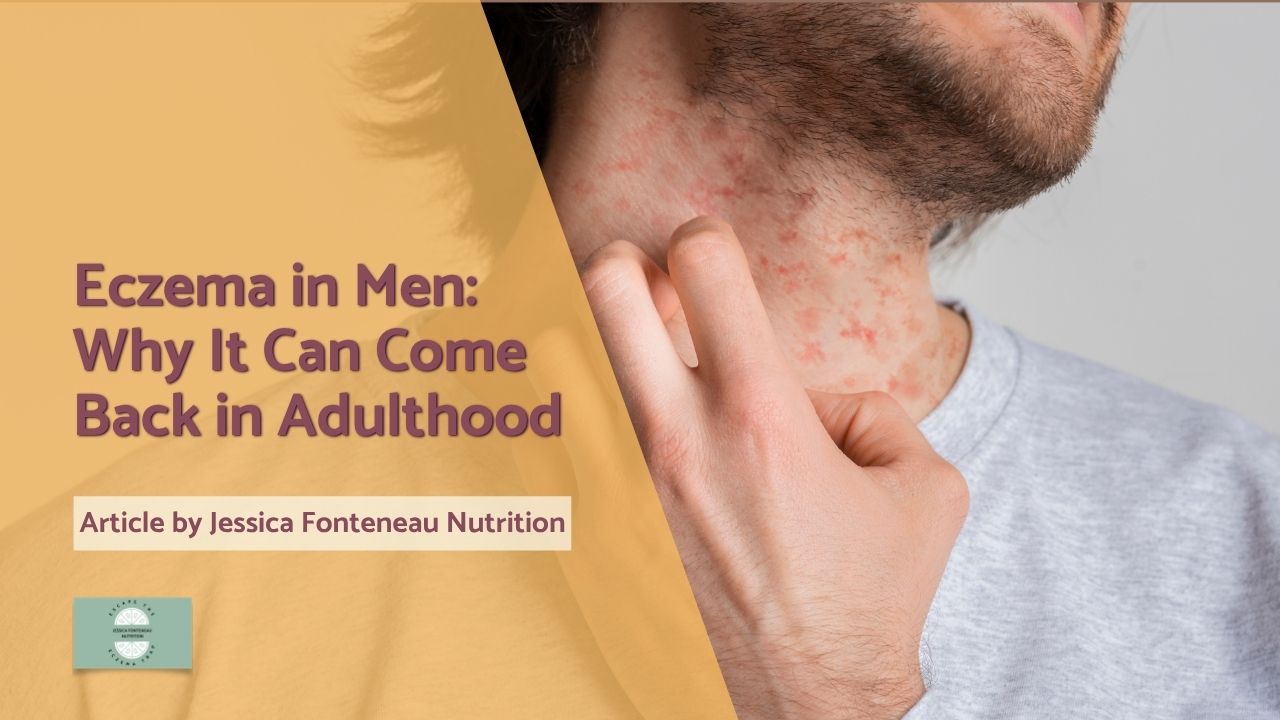
Eczema in Men: Why It Can Come Back in Adulthood
The men with eczema I see in my clinic are often slightly apologetic. They question whether the appointment is necessary.
The story often goes that he had eczema as a boy, severe enough that his mother still remembers the sleepless nights, the blood traces on the sheets and the creams lined up in the bathroom. Doctors told the family that he would probably grow out of it. For several years, it seemed that he had.
Then, sometime in his late twenties, the eczema began to return. First across the backs of his hands, then around his eyelids, followed by a patch on his neck that caught on his shirt collar. He saw his GP, used the prescribed topical treatment until the inflammation settled and carried on.
A few months later, it came back.
By the time he seeks my support, he has often repeated this cycle for years. He isn’t necessarily looking for another way to calm the visible flare. He wants to understand why his skin doesn’t settle for long and whether his diet affects recovery.
I see this in my practice all the time.
One of the things that interested me when I looked at the research was what happens to men with eczema after childhood. Boys are more likely to have eczema when they are young, but around puberty the pattern reverses and women become the more commonly affected group.¹ Adult men therefore become the minority, but that doesn’t mean their eczema is necessarily milder or less important. In fact, some of the research suggests the opposite, which is why I think adult male eczema deserves more attention than it gets.

Eczema changes across the male lifespan
Atopic dermatitis doesn’t follow one consistent male to female pattern from childhood into older age.
During early childhood, eczema is generally more common in boys. UK primary care data then show the pattern reversing at around 15 years of age, after which presentations become more common in girls and women throughout much of adult life.¹
The same broad shift has appeared in very different populations. Among Mexican adolescents aged 15 to 18, atopic dermatitis was reported in 7.7 per cent of girls compared with 2.4 per cent of boys.² Clinical examination of Japanese adults also found eczema to be more common in women, particularly during their twenties and thirties.³
The timing has led researchers to propose a role for sex hormones. Female sex hormones may stimulate aspects of the immune response involved in allergic inflammation, while androgens, including testosterone, may exert a partially protective effect against some atopic responses.¹˒². I’ve covered these in other articles I’ve written in the past.
These remain suggested mechanisms rather than proof that one hormone causes or prevents eczema. However, the close relationship between puberty and the change in prevalence suggests that hormones are likely to be part of the explanation.
The pattern appears to change again in later life. A large UK population study found that women had higher odds of atopic dermatitis through most of adulthood, but among people aged 75 to 99, women had lower odds than men.⁴ A Chinese registry also found a higher proportion of men among older adults with eczema.⁵
Hormonal changes may contribute, but they aren’t the only possibility. Ageing also alters the structure of the skin, barrier function, immune responses, medication use and the ability to repair damage. Whatever the mechanism, older men represent another group in whom eczema may be overlooked or attributed too quickly to ordinary dry, ageing skin.
Lower prevalence in adult men doesn’t mean milder disease
The data on severity isn’t as neat as the prevalence figures, but there is enough to challenge the assumption that because fewer adult men have eczema, their disease is milder.
In the Norwegian study, boys were more likely to require treatment for longer, received more potent topical corticosteroids and were treated more frequently for skin infections.⁶ A Korean study also found that boys were more likely to be classified as having severe atopic dermatitis,⁷ while among older adults in the Chinese registry, men had higher average Eczema Area and Severity Index scores than women.⁵
Severity, however, depends partly on what is being measured. In a UK study of adults with atopic dermatitis, women reported greater symptom severity and poorer skin related quality of life than men.⁸ That doesn’t contradict the findings above. Clinical scores capture what is happening to the skin, while quality of life measures capture how much eczema is affecting the person living with it.
Taken together, the research gives us a more useful picture than simply asking whether eczema is worse in men or women. Men may make up the smaller group during much of adulthood, but when they are affected, the disease can still be clinically significant and, in some age groups, objectively more severe.
Why adult male eczema may be underestimated
Men often describe their eczema as “not that bad”, then go on to explain that their hands split every time they train, work with tools or grip the steering wheel. Their eyelids swell after a poor night’s sleep. The skin on their neck catches on clothing throughout the day, or the itching wakes them several times each night.
A relatively small area of eczema can have a substantial effect when it involves the hands, face, eyelids, neck or genitals. Skin that repeatedly cracks, bleeds, weeps, becomes infected or interferes with sleep isn’t clinically insignificant simply because it doesn’t cover a large percentage of the body.
Many of the men manage their lives around their eczema, without even realising that that’s what they are doing. They’ve changed how they shave, wash, train or dress, avoided particular environments and learnt to tolerate a level of discomfort that has gradually become normal.
Clinical observation can’t demonstrate that men as a group always seek help later. In my practice, however, men frequently arrive after years of treating each flare as an isolated event, without anyone stepping back to examine the pattern as a whole.
They know how to suppress the visible inflammation. What they don’t know is why the skin becomes inflamed again.

When treating the flare isn’t the end of the investigation
Medical and dermatological treatment remain central to eczema care. Nutritional therapy doesn’t replace prescribed treatment, and I don’t advise patients to alter their topical treatment or medication. My role begins with a different question: what else may be reducing this patient’s skin resilience or interfering with recovery between flares?
The epidemiological studies discussed here don’t test nutritional therapy, and they can’t tell us which dietary or lifestyle factors matter for an individual patient. What they do highlight is a group whose adult eczema may receive less attention than it warrants.
A nutritional assessment considers whether the patient is eating adequately for his age, health, work and activity level. It looks beyond whether he describes his diet as healthy. Some men train regularly, work long hours and consistently under eat without recognising it. Others meet a protein target but consume a narrow range of fats, vegetables and other whole foods. Shift work, travel and long periods without food may mean that most of the day’s intake is compressed into one large evening meal.
At the opposite extreme, some have removed gluten, dairy, eggs, nightshades, sugar and multiple other foods after reading that they may trigger eczema. Their skin is still flaring, but the diet has become repetitive, nutritionally limited and increasingly difficult to manage. Neither pattern should be dismissed as irrelevant to skin health.
Skin is living tissue. It needs enough energy, protein, essential fats, vitamins and minerals to keep its structure, support barrier function and repair damage. Nutritional inadequacy may not have caused the eczema, but it can still matter when the skin is repeatedly inflamed and attempting to repair.
Assessment may also include digestive symptoms, bowel regularity, alcohol intake, sleep, stress and suspected food reactions. Where the wider context supports it, histamine accumulation may need to be considered, but I need to be clear, histamine is involved in every flare, but isn’t always the root cause of it.
The purpose isn’t to set a universal eczema diet. It’s to identify which areas are relevant to that individual client.
Suspected food reactions need structure
Food may contribute to eczema in some patients, but once food becomes a suspect, almost any meal can begin to look responsible.
A flare later in the day may be linked to what was eaten at lunch, even though the skin may also be responding to accumulated irritant exposure, heat, poor sleep, alcohol, stress or scratching. Foods are then removed one by one, often without a planned reintroduction, until the person is following an increasingly restricted diet without having established whether the exclusions are helping.
This is one of the areas where nutritional therapy can add practical value.
A structured investigation examines whether the reaction is consistent, whether other symptoms occur, whether the timing is plausible and whether the suspected food remains relevant when it is withdrawn and reintroduced methodically.
Sometimes a genuine reaction becomes clearer. Sometimes a food that has been avoided for months can be eaten again. My aim is always to increase variety in the diet, not lean into more restriction.
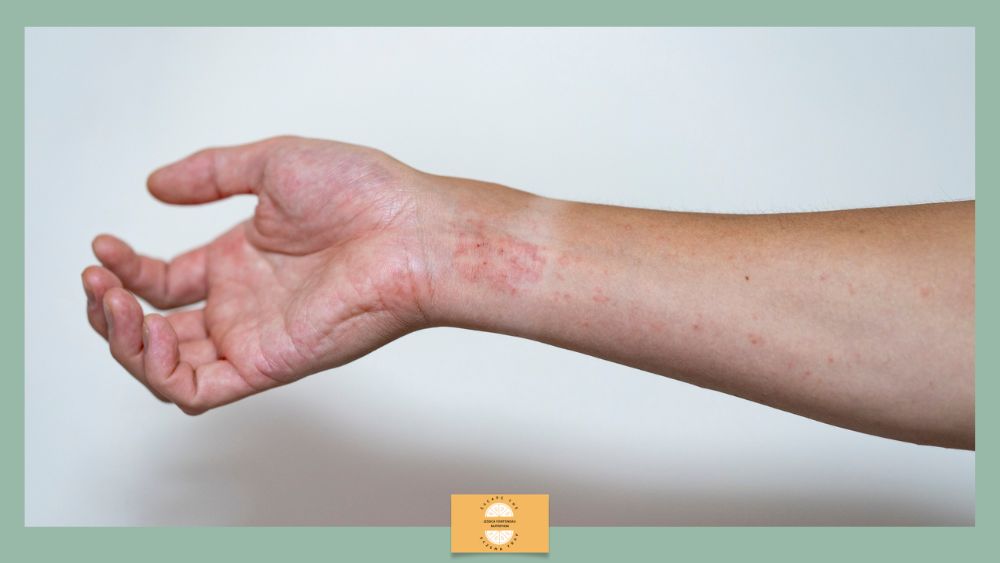
What I assess when a man is referred with eczema
When I work with a man whose eczema is persistent or keeps returning, I begin by mapping the history carefully.
I want to know when the eczema first appeared, whether it ever disappeared completely and whether the adult distribution resembles the childhood pattern. I look at what changed before the eczema returned, including work, environmental exposure, illness, sleep, stress, exercise and diet.
The current presentation is then considered in context. Does the eczema affect the hands, eyelids, face or neck? Is it becoming infected? Does it worsen around travel, alcohol, disrupted sleep or particular work exposures? Are digestive symptoms present? Has the diet become narrow? Is body weight changing? Is the patient eating enough for his activity level?
This detailed history is important because eczema doesn’t happen in isolation. Timing, sequence and recurrence often reveal more than appearance alone.
My assessment may cover nutritional adequacy, meal patterns, protein and essential fat intake, dietary variety, suspected food reactivity, digestive symptoms, bowel regularity, alcohol, sleep and stress. Blood results may also be reviewed where they are available and relevant.
The resulting recommendations are individual. One patient may need support to increase energy intake and rebuild regular meals. Another may need to broaden a diet that has become unnecessarily restricted. Someone else may benefit from a structured assessment of suspected food reactions or support to identify how work patterns, alcohol and poor sleep repeatedly coincide with flares.
This is not a replacement for medical management. It is an additional layer of investigation that can be difficult to complete within a standard GP or dermatology appointment.
When referral may be useful
Referral to a Registered Nutritional Therapist may be particularly helpful when an adult man has eczema that has returned after childhood, is becoming more persistent or continues to flare without a clear pattern.
It may also be useful when hand, facial, eyelid or neck eczema is affecting sleep, work or exercise, even if the overall area involved appears limited.
Other reasons to refer include suspected food reactions, digestive symptoms, extensive dietary restriction, weight loss, reduced food intake, high training demands, concern about nutritional adequacy or uncertainty about what is maintaining the flare.
I work alongside GPs, dermatologists and other healthcare professionals. I don’t alter prescribed medication or advise on topical treatment. My role is to assess the nutritional, dietary, digestive and lifestyle factors that may be relevant to the client’s wider presentation, then provide a practical plan that complements his existing medical care.
The clinical message
Eczema begins as a predominantly male condition in childhood, shifts towards girls and women around puberty, then may become more common in men again during older age.
The pattern around severity is more complex, but male eczema shouldn’t be assumed to be mild simply because adult prevalence is lower. Boys have shown greater treatment intensity and a higher likelihood of severe disease in some studies, while older men have shown greater objective severity in particular populations.
For practitioners, the key issue is recognition.
A man who has been managing the same eczema with the same topical treatment for twenty years may not need another general skincare leaflet. He may benefit from a broader assessment of his dietary intake, nutritional adequacy, suspected food reactions, digestive symptoms and the wider pattern surrounding his flares.
For professional referrals, or to discuss whether nutritional therapy may be appropriate for a patient, please contact me here: info@jessicafonteneaunutrition.com
For patients who would prefer to begin by exploring their own eczema pattern, the Escape the Eczema Trap® strands quiz offers a structured starting point or please feel free to book in for a free discovery call.
References
- Osman M, Hansell A, Simpson C, et al. Gender specific presentations for asthma, allergic rhinitis and eczema in primary care. Prim Care Respir J. 2007. doi:10.3132/PCRJ.2007.00006.
- González Mendoza T, Bedolla Barajas M, Bedolla Pulido TR, et al. The prevalence of allergic rhinitis and atopic dermatitis in late adolescents differs according to their gender. Rev Alerg Mex. 2019. doi:10.29262/ram.v66i2.521.
- Saeki H, Tsunemi Y, Fujita H, et al. Prevalence of atopic dermatitis determined by clinical examination in Japanese adults. J Dermatol. 2006. doi:10.1111/j.1346-8138.2006.00187.x.
- Chan LN, Magyari A, Ye M, et al. The epidemiology of atopic dermatitis in older adults: a population based study in the United Kingdom. PLoS One. 2021;16(10):e0258219. doi:10.1371/journal.pone.0258219.
- Li Z, Yin H, Wang Y, et al. Temporal and topographical heterogeneities in clinical manifestations of atopic dermatitis in China. J Clin Med. 2025;14(3):840. doi:10.3390/jcm14030840.
- Mohn CH, Blix HS, Brænd AM, et al. Treatment patterns of atopic dermatitis medication in 0 to 10 year olds: a nationwide prescription based study. Dermatol Ther. 2022. doi:10.1007/s13555-022-00754-6.
- Kim E, Ri S, Seo S, et al. Prevalence of atopic dermatitis and its associated factors for elementary school children in Gyeonggi do province. Allergy Asthma Respir Dis. 2016;4(5):346. doi:10.4168/AARD.2016.4.5.346.
- Birdi G, Larkin M, Chua S, Knibb R. Quality of life and mental wellbeing of adults with atopic dermatitis living in the UK. Clin Exp Allergy. 2022. doi:10.1111/cea.14237.


WHO AM I?
I’m Jessica Fonteneau, the Eczema and Digestive Health Nutrition Expert. I’ve worked with hundreds of clients to help them change their diets, better manage their flares, and find relief.
My vocation is to help those with eczema and digestive issues, because I have suffered with these interlinked conditions since I was 6 months old, and I truly know what it is like to experience these debilitating conditions.
Every client I have ever worked with has their own triggers and ideal nutrition. There is no such thing as ‘one-size-fits-all’. Whether you work with me one-to-one or use my guided tools, my objective is to help you uncover what works best for you, so that you take back control and experience relief.
My guided programmes are only suitable for adults as children have very specific nutrition requirements. I do, however, work with many child clients as part of my clinic.
To easily keep up with my articles, masterclasses, ebooks and online programmes and receive exclusive access to early bird offers, subscribe to my Substack, The Eczema Trap® here.
Google Reviews


Basit Gilani
5 months ago
We have been working with Jessica for a while now for my son’s eczema and many food intolerances. We have come a long way with him tolerating a lot more foods whilst previously being on such a limited diet. We have seen a huge difference in his skin too. One thing we love about working with her is that she is highly knowledgeable about how the gut works, what food works well and how to carefully introduce food to increase tolerance. We would honestly be so lost without her support. She provides timely responses if we have any concerns and always has such an empathetic approach if we have a little bump in our journey.
I would recommend Jessica to any parents struggling with their childs eczema or any individuals out there trying to figure out eczema, want to naturally heal through foods and identifying triggers to get relief in your flares.
I would recommend Jessica to any parents struggling with their childs eczema or any individuals out there trying to figure out eczema, want to naturally heal through foods and identifying triggers to get relief in your flares.

Insight Parenting
7 months ago
I have no hesitation in highly recommending Jessica. She really knows her stuff! I first consulted her six months ago with lack of appetite, lack of energy and depression, not unrelated to having recently become a widow. Right from the start I was very impressed at the way Jessica really listened to me during her consultations, writing very thorough and detailed reports afterwards with her holistic recommendations . Six months later I am eating better, have more energy and even able to go dancing regularly (which is not bad for a 74 year old!) Thank you Jessica

Katharina Ehrhart
9 months ago
Jessica has helped save my sanity when I was suffering from unexplained symptoms. She very quickly identified that this could be the side effects of an overdose of supplements and once I discontinued these, I felt better quickly. I continued working with Jessica on other food and lifestyle questions and always found her extremely helpful, patient and knowledgable. I would recommend her to friends and family.

Olivia Churchill
10 months ago
Jessica was a fantastic support when my 1 year old developed severe eczema. We worked together to identify the root cause of her symptoms and Jessica advised an easy to follow, realistic and successful protocol for us to follow to help her manage this. My daughter’s skin significantly calmed down within weeks and although it’s been a long journey her eczema has now disappeared. Jessica has extensive knowledge on eczema and created a personal plan for us to follow. She was always available and willing to help and reassure where needed. I wouldn’t hesitate to recommend her to anyone looking for support with nutrition or skin issues. Thank you so much!

Farah Fenoughty
1 year ago
We have been working with Jessica Fonteneau for several months now. From the very first consultation Jessica was empathetic and listened attentively to concerns about our son's health and Eczema. Since then we are really seeing the benefits of her advice and nutritional recommendations. I have learnt so much! Jessica's offers practical and manageable solutions and doesn't bombard you with too much information or unattainable goals. I am so glad we found Jessica Fonteneau and highly recommend.

Evie Smith
1 year ago
After struggling with severe eczema nearly all my life and trying countless steroid creams/emollients prescribed by dermatology consultants I have finally been able to take back control of my skin through Jessica's trigger identifying diet. The skills and tool kit she has provided me with have been life changing and I'm confident I have everything I need to continue my journey without the help of a professional. Jessica has helped me to feel empowered through understanding my body and I am very grateful.

Hayley Brookhouse
2 years ago
Jessica has helped me and my son so much with some persistent eczema on his face. She put together a highly comprehensive plan and considered all aspects of his diet, routine and lifestyle. She has checked in several times since our appointment and I felt she really cared about his health and well-being. Highly recommend to any parents whose child is suffering from an allergy or skin disorder!
 English (UK)
  Français