
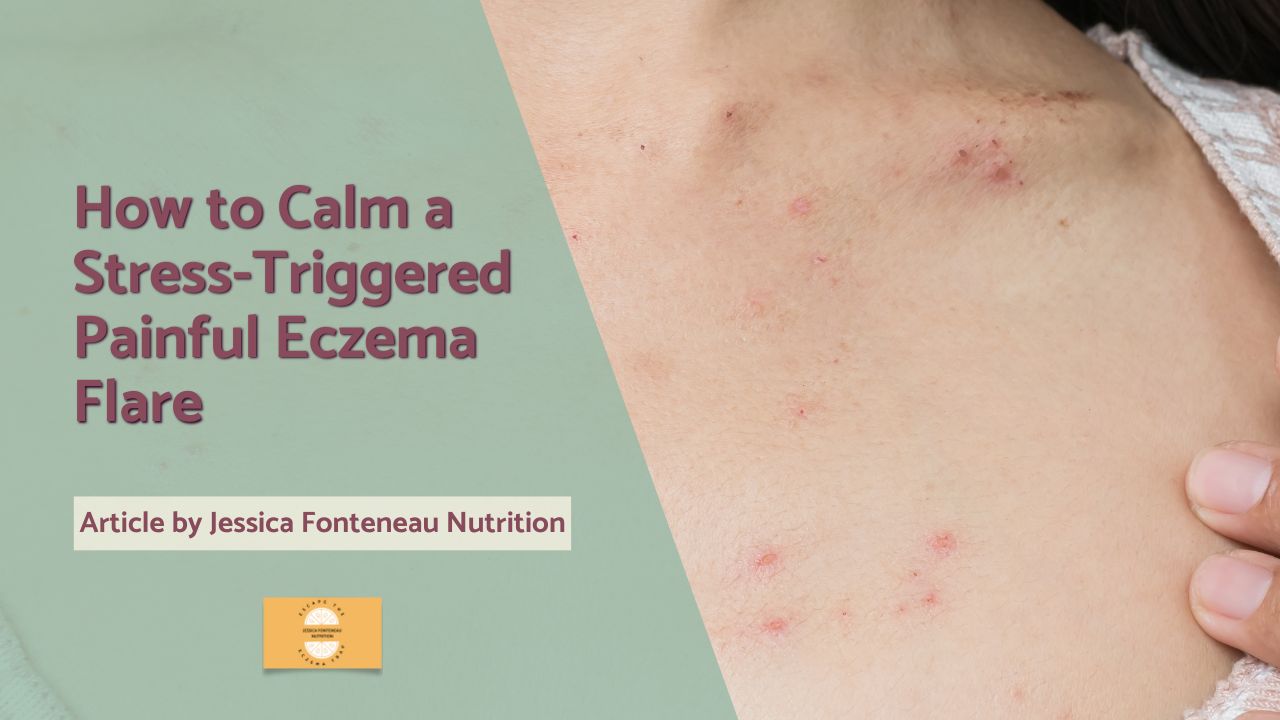
How to Calm a Stress Triggered Painful Eczema Flare
Eczema can feel unpredictable and exhausting. One moment your skin feels settled, and the next you’re dealing with a painful, stress-triggered flare that seems to come from nowhere. When this happens, it’s very easy to blame food, skincare or the weather. However, stress often plays a much bigger role than people realise. It changes the way your gut works, which then changes how your skin behaves. Once you understand that connection, you start to feel less confused and more in control. You also gain simple ways to calm your skin from the inside out.
Why Stress Changes Your Digestion and Skin
Stress doesn’t just affect your mood. It shifts your whole body into a different state. When that happens, your digestion, your microbiome and your skin all respond. This explains why even small stresses can feel enormous when you live with eczema.
For example, researchers followed healthy students through exam season and found something striking. When their stress increased, their skin repaired itself more slowly after controlled barrier damage. The students with the highest stress healed the slowest¹. Their skincare routines didn’t change. Their biology did.
In addition, many people notice that their digestion feels unsettled during stressful weeks. You might feel bloated after a familiar meal, or you might find that food sits heavily in your stomach. This can feel confusing, especially when your tests come back normal. However, the most common stool test, faecal calprotectin, only measures one type of inflammation. It can’t detect the functional digestive shifts caused by stress. Two large inflammatory bowel disease studies show the same pattern. When stress rises, symptoms often get worse, but calprotectin stays the same²³. Because of this, many people feel symptoms that don’t match their test results.
Eczema adds another layer to this picture. Your gut and skin communicate constantly, so when stress unsettles your gut, your skin often reacts soon after.
What Really Happens Inside Your Body When You Eat Under Stress
When stress builds, your body switches into “alert mode.” This mode prepares you to act quickly rather than digest well. As a result, stomach acid falls, digestive enzymes drop and gut movement slows⁴. A meal that normally feels fine may suddenly feel uncomfortable, heavy or irritating.
Stress also affects the microbiome. For instance, researchers studying children with Crohn’s disease found that higher stress linked with fewer beneficial bacteria and more microbes associated with inflammation⁵. Their stool metabolites changed too. These shifts appeared before any standard tests detected inflammation. Because of this, your symptoms often appear long before any laboratory measure changes.
Your skin responds in a similar way. In the student study mentioned earlier, higher stress slowed skin barrier recovery. When the students relaxed during holidays, their skin healed more quickly again¹. This shows that stress affects healing in real time.
You may recognise this pattern. Stressful days often make your digestion feel sluggish and your skin feel reactive. You might also notice itchiness after rushed meals or find that you react to foods that you normally tolerate. Although these moments feel frustrating, they make sense once you understand how closely your gut and skin respond to stress.

Small Shifts That Help You Calm Your Gut and Your Skin
Mindful eating sounds simple, but your body responds to it quickly. You don’t need long routines or dramatic changes. Instead, you choose small habits that help your nervous system settle before you eat.
You can start with a short pause. Sit down, place your feet on the floor and take one steady breath. Relax your shoulders. Let your jaw soften. This small shift signals safety to your body. As a result, your vagus nerve activates and helps your body move into rest-and-digest mode⁶. Many people notice less bloating within days of starting this practice.
In addition, calm eating helps your stomach release the acid and enzymes it needs. Food breaks down more effectively, and your gut moves it along more smoothly. This calmer state also supports your microbiome. Stress reduces the bacteria that produce soothing short-chain fatty acids. However, mindful eating helps create an environment where these bacteria can thrive again⁵. When your microbiome feels steadier, your skin often follows.
Next, mindful eating breaks the pattern between stress and symptoms. Stress unsettles digestion. Unsettled digestion unsettles the skin. This flare then increases stress again. Although this loop feels exhausting, mealtimes offer a perfect entry point to interrupt it. When you bring calm into the body before eating, you give your gut the signal it needs to digest well. As a result, your skin receives fewer inflammatory signals.
You can also add small habits that support this calmer state. For example, you can put your phone aside during meals so your mind doesn’t feel overstimulated. You can take two breaths between bites. You can chew a little more slowly. These tiny changes add up. They create a gentler internal rhythm that supports both digestion and skin health.

How Mindful Eating Supports Your Skin from the Inside Out
Mindful eating doesn’t replace nutrition. It supports it. Stress reduces the absorption of key nutrients such as zinc, magnesium and omega-3 fatty acids⁷. These nutrients play an important role in skin repair and barrier strength. Because of this, eating in a calmer state helps your body use the nutrients you’re already consuming.
Stress also affects histamine. When you feel tense, your gut often releases more histamine and struggles to break it down⁸. This may explain why itchiness increases during stressful meals. Mindful eating lowers this response by easing tension in the gut and supporting better enzyme activity. Consequently, you may notice fewer itchy sensations after eating.
Although these changes may not appear on a calprotectin test, they’re still real. Stress affects how your body functions rather than raising neutrophil-based inflammation²³. Because of this, your symptoms often explain more than your test results.
A New Way to Approach Eczema and Eating
Mindful eating isn’t about eating slowly or forcing calm. It simply helps you create a short moment of steadiness before each meal. This shift calms the nervous system, supports digestion and reduces the stress messages that reach your skin.
Eczema can make you feel reactive or easily overwhelmed. However, mindful eating offers a more supportive way of understanding your body. Your skin doesn’t react without reason. It responds to your internal environment. When you bring calm into that environment, your gut and your skin often settle. You begin working with your body rather than fighting against it.
Key takeaways
- Stress unsettles digestion, the microbiome and the skin barrier
- Standard inflammation tests can’t detect these changes
- Mindful eating supports rest-and-digest mode
- Small habits calm the gut–skin axis
- Consistent practice supports predictable, more comfortable skin
If you’d like support with mindful eating
If you’d like some help putting mindful eating into practice, I’ve created a simple, gentle 21-day programme designed specifically for people who live with eczema. It guides you through short daily steps that help your body settle before meals, improve digestion and support calmer skin. Each lesson takes only a few minutes, and you can follow it at your own pace.
The programme costs £39 and offers an easy way to build habits that feel realistic on busy days. If you’ve ever wanted a calmer, more supportive relationship with food and your skin, this is a good place to start.
References
- Garg A, Chren MM, Sands LP, Matsui MS, Marenus KD, Feingold KR, Elias PM. Psychological stress perturbs epidermal permeability barrier homeostasis. Arch Dermatol. 2001;137(1):53–59.
- Targownik LE, Sexton KA, Bernstein MT, et al. The relationship among perceived stress, symptoms, and inflammation in persons with inflammatory bowel disease. Am J Gastroenterol. 2015;110(7):1001–1012.
- Sexton KA, Walker JR, Graff LA, et al. Evidence of bidirectional associations between perceived stress and symptom activity: a prospective longitudinal investigation in inflammatory bowel disease. Inflamm Bowel Dis. 2017;23(12):2077–2085.
- Konturek PC, Brzozowski T, Konturek SJ. Stress and the gastrointestinal tract. J Physiol Pharmacol. 2011;62(6):591–599.
- Mackner LM, Hatzakis E, Allen JM, et al. Fecal microbiota and metabolites are distinct in a pilot study of paediatric Crohn’s disease patients with higher levels of perceived stress. Psychoneuroendocrinology. 2020;113:104469.
- Noble DJ, Hochman S. Deep breathing and autonomic regulation. Front Physiol. 2019;10:430.
- O’Neill CA, Monteleone G, McLaughlin JT, Paus R. The gut–skin axis in health and disease. Nat Rev Gastroenterol Hepatol. 2016;13(10):515–526.
- Maintz L, Novak N. Histamine and histamine intolerance. Am J Clin Nutr. 2007;85(5):1185–1196.


WHO AM I?
I’m Jessica Fonteneau, the Eczema and Digestive Health Nutrition Expert. I’ve worked with hundreds of clients to help them change their diets, better manage their flares, and find relief.
My vocation is to help those with eczema and digestive issues, because I have suffered with these interlinked conditions since I was 6 months old, and I truly know what it is like to experience these debilitating conditions.
Every client I have ever worked with has their own triggers and ideal nutrition. There is no such thing as ‘one-size-fits-all’. Whether you work with me one-to-one or use my guided tools, my objective is to help you uncover what works best for you, so that you take back control and experience relief.
My guided programmes are only suitable for adults as children have very specific nutrition requirements. I do, however, work with many child clients as part of my clinic.
To easily keep up with my articles, masterclasses, ebooks and online programmes and receive exclusive access to early bird offers, subscribe to my Substack, The Eczema Trap® here.
Google Reviews


Basit Gilani
5 months ago
We have been working with Jessica for a while now for my son’s eczema and many food intolerances. We have come a long way with him tolerating a lot more foods whilst previously being on such a limited diet. We have seen a huge difference in his skin too. One thing we love about working with her is that she is highly knowledgeable about how the gut works, what food works well and how to carefully introduce food to increase tolerance. We would honestly be so lost without her support. She provides timely responses if we have any concerns and always has such an empathetic approach if we have a little bump in our journey.
I would recommend Jessica to any parents struggling with their childs eczema or any individuals out there trying to figure out eczema, want to naturally heal through foods and identifying triggers to get relief in your flares.
I would recommend Jessica to any parents struggling with their childs eczema or any individuals out there trying to figure out eczema, want to naturally heal through foods and identifying triggers to get relief in your flares.

Insight Parenting
7 months ago
I have no hesitation in highly recommending Jessica. She really knows her stuff! I first consulted her six months ago with lack of appetite, lack of energy and depression, not unrelated to having recently become a widow. Right from the start I was very impressed at the way Jessica really listened to me during her consultations, writing very thorough and detailed reports afterwards with her holistic recommendations . Six months later I am eating better, have more energy and even able to go dancing regularly (which is not bad for a 74 year old!) Thank you Jessica

Katharina Ehrhart
10 months ago
Jessica has helped save my sanity when I was suffering from unexplained symptoms. She very quickly identified that this could be the side effects of an overdose of supplements and once I discontinued these, I felt better quickly. I continued working with Jessica on other food and lifestyle questions and always found her extremely helpful, patient and knowledgable. I would recommend her to friends and family.

Olivia Churchill
10 months ago
Jessica was a fantastic support when my 1 year old developed severe eczema. We worked together to identify the root cause of her symptoms and Jessica advised an easy to follow, realistic and successful protocol for us to follow to help her manage this. My daughter’s skin significantly calmed down within weeks and although it’s been a long journey her eczema has now disappeared. Jessica has extensive knowledge on eczema and created a personal plan for us to follow. She was always available and willing to help and reassure where needed. I wouldn’t hesitate to recommend her to anyone looking for support with nutrition or skin issues. Thank you so much!

Farah Fenoughty
1 year ago
We have been working with Jessica Fonteneau for several months now. From the very first consultation Jessica was empathetic and listened attentively to concerns about our son's health and Eczema. Since then we are really seeing the benefits of her advice and nutritional recommendations. I have learnt so much! Jessica's offers practical and manageable solutions and doesn't bombard you with too much information or unattainable goals. I am so glad we found Jessica Fonteneau and highly recommend.

Evie Smith
1 year ago
After struggling with severe eczema nearly all my life and trying countless steroid creams/emollients prescribed by dermatology consultants I have finally been able to take back control of my skin through Jessica's trigger identifying diet. The skills and tool kit she has provided me with have been life changing and I'm confident I have everything I need to continue my journey without the help of a professional. Jessica has helped me to feel empowered through understanding my body and I am very grateful.

Hayley Brookhouse
2 years ago
Jessica has helped me and my son so much with some persistent eczema on his face. She put together a highly comprehensive plan and considered all aspects of his diet, routine and lifestyle. She has checked in several times since our appointment and I felt she really cared about his health and well-being. Highly recommend to any parents whose child is suffering from an allergy or skin disorder!
 English (UK)
  Français