
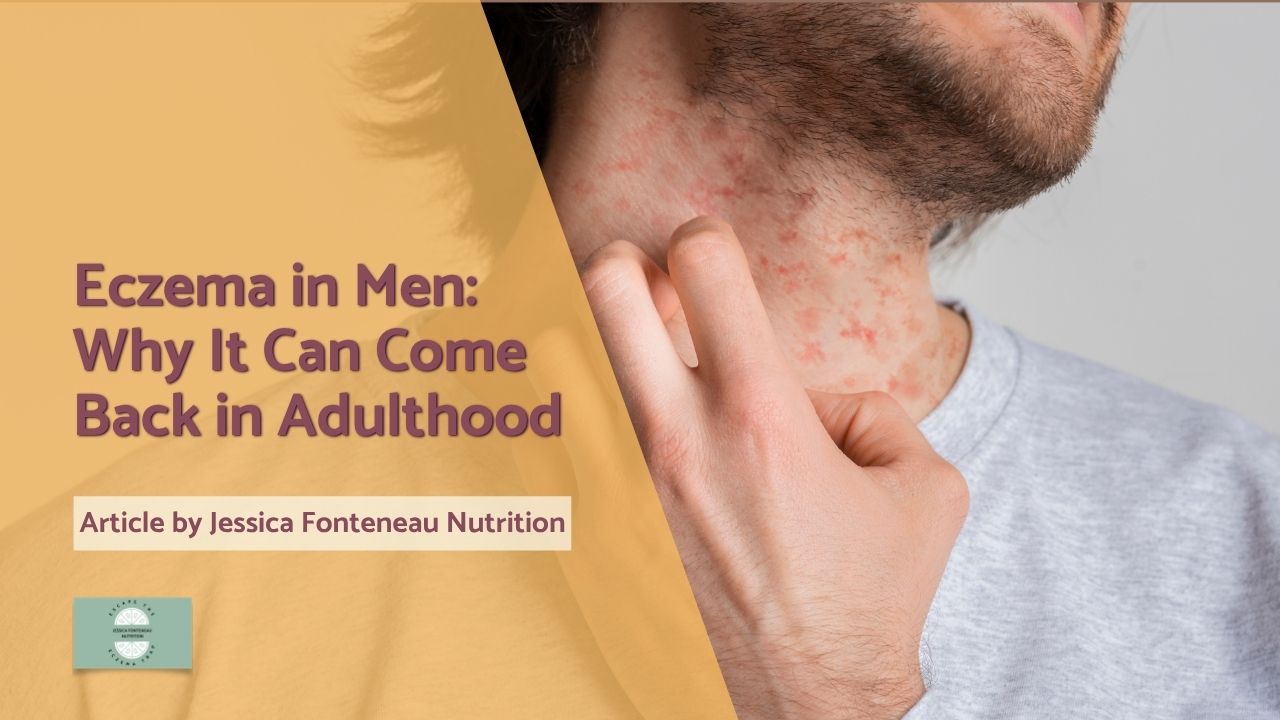
Eczema in Men: Why It Can Come Back in Adulthood
The men with eczema I see in my clinic are often slightly apologetic. They question whether the appointment is necessary.
The story often goes that he had eczema as a boy, severe enough that his mother still remembers the sleepless nights, the blood traces on the sheets and the creams lined up in the bathroom. Doctors told the family that he would probably grow out of it. For several years, it seemed that he had.
Then, sometime in his late twenties, the eczema began to return. First across the backs of his hands, then around his eyelids, followed by a patch on his neck that caught on his shirt collar. He saw his GP, used the prescribed topical treatment until the inflammation settled and carried on.
A few months later, it came back.
By the time he seeks my support, he has often repeated this cycle for years. He isn’t necessarily looking for another way to calm the visible flare. He wants to understand why his skin doesn’t settle for long and whether his diet affects recovery.
I see this in my practice all the time.
One of the things that interested me when I looked at the research was what happens to men with eczema after childhood. Boys are more likely to have eczema when they are young, but around puberty the pattern reverses and women become the more commonly affected group.¹ Adult men therefore become the minority, but that doesn’t mean their eczema is necessarily milder or less important. In fact, some of the research suggests the opposite, which is why I think adult male eczema deserves more attention than it gets.

Eczema changes across the male lifespan
Atopic dermatitis doesn’t follow one consistent male to female pattern from childhood into older age.
During early childhood, eczema is generally more common in boys. UK primary care data then show the pattern reversing at around 15 years of age, after which presentations become more common in girls and women throughout much of adult life.¹
The same broad shift has appeared in very different populations. Among Mexican adolescents aged 15 to 18, atopic dermatitis was reported in 7.7 per cent of girls compared with 2.4 per cent of boys.² Clinical examination of Japanese adults also found eczema to be more common in women, particularly during their twenties and thirties.³
The timing has led researchers to propose a role for sex hormones. Female sex hormones may stimulate aspects of the immune response involved in allergic inflammation, while androgens, including testosterone, may exert a partially protective effect against some atopic responses.¹˒². I’ve covered these in other articles I’ve written in the past.
These remain suggested mechanisms rather than proof that one hormone causes or prevents eczema. However, the close relationship between puberty and the change in prevalence suggests that hormones are likely to be part of the explanation.
The pattern appears to change again in later life. A large UK population study found that women had higher odds of atopic dermatitis through most of adulthood, but among people aged 75 to 99, women had lower odds than men.⁴ A Chinese registry also found a higher proportion of men among older adults with eczema.⁵
Hormonal changes may contribute, but they aren’t the only possibility. Ageing also alters the structure of the skin, barrier function, immune responses, medication use and the ability to repair damage. Whatever the mechanism, older men represent another group in whom eczema may be overlooked or attributed too quickly to ordinary dry, ageing skin.
Lower prevalence in adult men doesn’t mean milder disease
The data on severity isn’t as neat as the prevalence figures, but there is enough to challenge the assumption that because fewer adult men have eczema, their disease is milder.
In the Norwegian study, boys were more likely to require treatment for longer, received more potent topical corticosteroids and were treated more frequently for skin infections.⁶ A Korean study also found that boys were more likely to be classified as having severe atopic dermatitis,⁷ while among older adults in the Chinese registry, men had higher average Eczema Area and Severity Index scores than women.⁵
Severity, however, depends partly on what is being measured. In a UK study of adults with atopic dermatitis, women reported greater symptom severity and poorer skin related quality of life than men.⁸ That doesn’t contradict the findings above. Clinical scores capture what is happening to the skin, while quality of life measures capture how much eczema is affecting the person living with it.
Taken together, the research gives us a more useful picture than simply asking whether eczema is worse in men or women. Men may make up the smaller group during much of adulthood, but when they are affected, the disease can still be clinically significant and, in some age groups, objectively more severe.
Why adult male eczema may be underestimated
Men often describe their eczema as “not that bad”, then go on to explain that their hands split every time they train, work with tools or grip the steering wheel. Their eyelids swell after a poor night’s sleep. The skin on their neck catches on clothing throughout the day, or the itching wakes them several times each night.
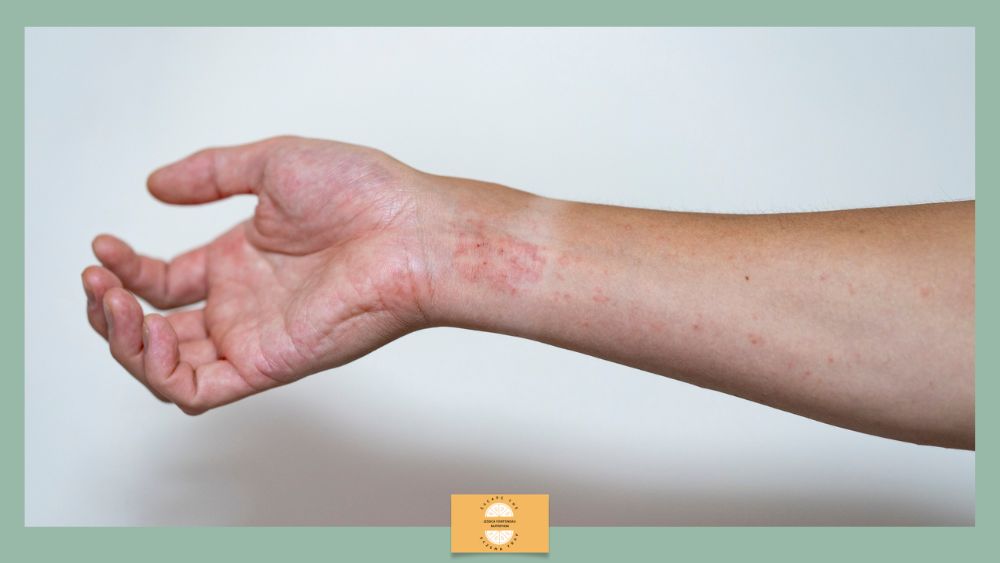
A relatively small area of eczema can have a substantial effect when it involves the hands, face, eyelids, neck or genitals. Skin that repeatedly cracks, bleeds, weeps, becomes infected or interferes with sleep isn’t clinically insignificant simply because it doesn’t cover a large percentage of the body.
Many of the men manage their lives around their eczema, without even realising that that’s what they are doing. They’ve changed how they shave, wash, train or dress, avoided particular environments and learnt to tolerate a level of discomfort that has gradually become normal.
Clinical observation can’t demonstrate that men as a group always seek help later. In my practice, however, men frequently arrive after years of treating each flare as an isolated event, without anyone stepping back to examine the pattern as a whole.
They know how to suppress the visible inflammation. What they don’t know is why the skin becomes inflamed again.

When treating the flare isn’t the end of the investigation
Medical and dermatological treatment remain central to eczema care. Nutritional therapy doesn’t replace prescribed treatment, and I don’t advise patients to alter their topical treatment or medication. My role begins with a different question: what else may be reducing this patient’s skin resilience or interfering with recovery between flares?
The epidemiological studies discussed here don’t test nutritional therapy, and they can’t tell us which dietary or lifestyle factors matter for an individual patient. What they do highlight is a group whose adult eczema may receive less attention than it warrants.
A nutritional assessment considers whether the patient is eating adequately for his age, health, work and activity level. It looks beyond whether he describes his diet as healthy. Some men train regularly, work long hours and consistently under eat without recognising it. Others meet a protein target but consume a narrow range of fats, vegetables and other whole foods. Shift work, travel and long periods without food may mean that most of the day’s intake is compressed into one large evening meal.
At the opposite extreme, some have removed gluten, dairy, eggs, nightshades, sugar and multiple other foods after reading that they may trigger eczema. Their skin is still flaring, but the diet has become repetitive, nutritionally limited and increasingly difficult to manage. Neither pattern should be dismissed as irrelevant to skin health.
Skin is living tissue. It needs enough energy, protein, essential fats, vitamins and minerals to keep its structure, support barrier function and repair damage. Nutritional inadequacy may not have caused the eczema, but it can still matter when the skin is repeatedly inflamed and attempting to repair.
Assessment may also include digestive symptoms, bowel regularity, alcohol intake, sleep, stress and suspected food reactions. Where the wider context supports it, histamine accumulation may need to be considered, but I need to be clear, histamine is involved in every flare, but isn’t always the root cause of it.
The purpose isn’t to set a universal eczema diet. It’s to identify which areas are relevant to that individual client.
Suspected food reactions need structure
Food may contribute to eczema in some patients, but once food becomes a suspect, almost any meal can begin to look responsible.
A flare later in the day may be linked to what was eaten at lunch, even though the skin may also be responding to accumulated irritant exposure, heat, poor sleep, alcohol, stress or scratching. Foods are then removed one by one, often without a planned reintroduction, until the person is following an increasingly restricted diet without having established whether the exclusions are helping.
This is one of the areas where nutritional therapy can add practical value.
A structured investigation examines whether the reaction is consistent, whether other symptoms occur, whether the timing is plausible and whether the suspected food remains relevant when it is withdrawn and reintroduced methodically.
Sometimes a genuine reaction becomes clearer. Sometimes a food that has been avoided for months can be eaten again. My aim is always to increase variety in the diet, not lean into more restriction.
What I assess when a man is referred with eczema
When I work with a man whose eczema is persistent or keeps returning, I begin by mapping the history carefully.
I want to know when the eczema first appeared, whether it ever disappeared completely and whether the adult distribution resembles the childhood pattern. I look at what changed before the eczema returned, including work, environmental exposure, illness, sleep, stress, exercise and diet.
The current presentation is then considered in context. Does the eczema affect the hands, eyelids, face or neck? Is it becoming infected? Does it worsen around travel, alcohol, disrupted sleep or particular work exposures? Are digestive symptoms present? Has the diet become narrow? Is body weight changing? Is the patient eating enough for his activity level?
This detailed history is important because eczema doesn’t happen in isolation. Timing, sequence and recurrence often reveal more than appearance alone.
My assessment may cover nutritional adequacy, meal patterns, protein and essential fat intake, dietary variety, suspected food reactivity, digestive symptoms, bowel regularity, alcohol, sleep and stress. Blood results may also be reviewed where they are available and relevant.
The resulting recommendations are individual. One patient may need support to increase energy intake and rebuild regular meals. Another may need to broaden a diet that has become unnecessarily restricted. Someone else may benefit from a structured assessment of suspected food reactions or support to identify how work patterns, alcohol and poor sleep repeatedly coincide with flares.
This is not a replacement for medical management. It is an additional layer of investigation that can be difficult to complete within a standard GP or dermatology appointment.
When referral may be useful
Referral to a Registered Nutritional Therapist may be particularly helpful when an adult man has eczema that has returned after childhood, is becoming more persistent or continues to flare without a clear pattern.
It may also be useful when hand, facial, eyelid or neck eczema is affecting sleep, work or exercise, even if the overall area involved appears limited.
Other reasons to refer include suspected food reactions, digestive symptoms, extensive dietary restriction, weight loss, reduced food intake, high training demands, concern about nutritional adequacy or uncertainty about what is maintaining the flare.
I work alongside GPs, dermatologists and other healthcare professionals. I don’t alter prescribed medication or advise on topical treatment. My role is to assess the nutritional, dietary, digestive and lifestyle factors that may be relevant to the client’s wider presentation, then provide a practical plan that complements his existing medical care.
The clinical message
Eczema begins as a predominantly male condition in childhood, shifts towards girls and women around puberty, then may become more common in men again during older age.
The pattern around severity is more complex, but male eczema shouldn’t be assumed to be mild simply because adult prevalence is lower. Boys have shown greater treatment intensity and a higher likelihood of severe disease in some studies, while older men have shown greater objective severity in particular populations.
For practitioners, the key issue is recognition.
A man who has been managing the same eczema with the same topical treatment for twenty years may not need another general skincare leaflet. He may benefit from a broader assessment of his dietary intake, nutritional adequacy, suspected food reactions, digestive symptoms and the wider pattern surrounding his flares.
For professional referrals, or to discuss whether nutritional therapy may be appropriate for a patient, please contact me here: info@jessicafonteneaunutrition.com
For patients who would prefer to begin by exploring their own eczema pattern, the Escape the Eczema Trap® strands quiz offers a structured starting point or please feel free to book in for a free discovery call.
Références
- Osman M, Hansell A, Simpson C, et al. Gender specific presentations for asthma, allergic rhinitis and eczema in primary care. Prim Care Respir J. 2007. doi:10.3132/PCRJ.2007.00006.
- González Mendoza T, Bedolla Barajas M, Bedolla Pulido TR, et al. The prevalence of allergic rhinitis and atopic dermatitis in late adolescents differs according to their gender. Rev Alerg Mex. 2019. doi:10.29262/ram.v66i2.521.
- Saeki H, Tsunemi Y, Fujita H, et al. Prevalence of atopic dermatitis determined by clinical examination in Japanese adults. J Dermatol. 2006. doi:10.1111/j.1346-8138.2006.00187.x.
- Chan LN, Magyari A, Ye M, et al. The epidemiology of atopic dermatitis in older adults: a population based study in the United Kingdom. PLoS One. 2021;16(10):e0258219. doi:10.1371/journal.pone.0258219.
- Li Z, Yin H, Wang Y, et al. Temporal and topographical heterogeneities in clinical manifestations of atopic dermatitis in China. J Clin Med. 2025;14(3):840. doi:10.3390/jcm14030840.
- Mohn CH, Blix HS, Brænd AM, et al. Treatment patterns of atopic dermatitis medication in 0 to 10 year olds: a nationwide prescription based study. Dermatol Ther. 2022. doi:10.1007/s13555-022-00754-6.
- Kim E, Ri S, Seo S, et al. Prevalence of atopic dermatitis and its associated factors for elementary school children in Gyeonggi do province. Allergy Asthma Respir Dis. 2016;4(5):346. doi:10.4168/AARD.2016.4.5.346.
- Birdi G, Larkin M, Chua S, Knibb R. Quality of life and mental wellbeing of adults with atopic dermatitis living in the UK. Clin Exp Allergy. 2022. doi:10.1111/cea.14237.


QUI SUIS-JE ?
Je suis Jessica Fonteneau, l'experte en nutrition pour l'eczéma et la santé digestive. J'ai travaillé avec des centaines de clients pour les aider à modifier leur régime alimentaire, à mieux gérer leurs poussées et à trouver un soulagement.
Ma vocation est d'aider les personnes souffrant d'eczéma et de problèmes digestifs, car je souffre de ces affections interdépendantes depuis l'âge de six mois, et je sais vraiment ce que c'est que de vivre ces affections débilitantes.
Chaque client avec lequel j'ai travaillé a ses propres déclencheurs et sa propre alimentation idéale. Il n'existe pas de solution unique. Que vous travailliez avec moi en tête-à-tête ou que vous utilisiez mes outils guidés, mon objectif est de vous aider à découvrir ce qui fonctionne le mieux pour vous, afin que vous repreniez le contrôle et que vous ressentiez un soulagement.
Mes programmes guidés ne conviennent qu'aux adultes, car les enfants ont des besoins nutritionnels très spécifiques. Je travaille cependant avec de nombreux enfants dans le cadre de ma clinique.
Pour suivre facilement mes articles, masterclasses, ebooks et programmes en ligne et bénéficier d'un accès exclusif aux offres de pré-vente, Abonnez-vous à mon Substack, The Eczema Trap® ici.
Avis de Google


Basit Gilani
il y a 5 mois
Nous travaillons avec Jessica depuis un certain temps pour l'eczéma de mon fils et ses nombreuses intolérances alimentaires. Nous avons fait beaucoup de progrès avec lui, car il tolère beaucoup plus d'aliments alors qu'il suivait auparavant un régime très limité. Nous avons également constaté une énorme amélioration de sa peau. Ce que nous aimons particulièrement chez elle, c'est qu'elle est très compétente sur le fonctionnement de l'intestin, sur les aliments qui conviennent et sur la manière d'introduire prudemment les aliments pour augmenter la tolérance. Honnêtement, nous serions tellement perdus sans son soutien. Elle répond rapidement à nos préoccupations et adopte toujours une approche empathique lorsque nous rencontrons un petit obstacle sur notre chemin.
Je recommanderais Jessica à tous les parents aux prises avec l'eczéma de leur enfant ou à toute personne cherchant à comprendre l'eczéma, désirant guérir naturellement par l'alimentation et identifier les déclencheurs pour soulager les poussées.
Je recommanderais Jessica à tous les parents aux prises avec l'eczéma de leur enfant ou à toute personne cherchant à comprendre l'eczéma, désirant guérir naturellement par l'alimentation et identifier les déclencheurs pour soulager les poussées.

Le Parentage éclairé
il y a 7 mois
Je recommande vivement Jessica sans aucune hésitation. Elle sait vraiment de quoi elle parle ! Je l'ai consultée pour la première fois il y a six mois, souffrant d'un manque d'appétit, d'un manque d'énergie et de dépression, non sans rapport avec le fait d'être récemment devenue veuve. Dès le début, j'ai été très impressionnée par la façon dont Jessica m'écoutait attentivement lors de ses consultations, rédigeant ensuite des rapports très complets et détaillés avec ses recommandations holistiques. Six mois plus tard, je mange mieux, j'ai plus d'énergie et je peux même aller danser régulièrement (ce qui n'est pas mal pour une femme de 74 ans !) Merci Jessica.

Katharina Ehrhart
il y a 10 mois
Jessica m'a aidée à sauver ma raison quand je souffrais de symptômes inexpliqués. Elle a très rapidement identifié que cela pouvait être les effets secondaires d'un surdosage de suppléments et une fois que j'ai arrêté ceux-ci, je me suis rapidement sentie mieux. J'ai continué à travailler avec Jessica sur d'autres questions d'alimentation et de mode de vie et je l'ai toujours trouvée extrêmement utile, patiente et compétente. Je la recommanderais à mes amis et à ma famille.

Olivia Churchill
il y a 10 mois
Jessica a été d'un soutien fantastique lorsque ma fille de 1 an a développé un eczéma sévère. Nous avons travaillé ensemble pour identifier la cause profonde de ses symptômes et Jessica nous a conseillé un protocole facile à suivre, réaliste et efficace pour l'aider à gérer cela. La peau de ma fille s'est considérablement calmée en quelques semaines et, bien que le chemin ait été long, son eczéma a maintenant disparu. Jessica a des connaissances approfondies sur l'eczéma et a créé un plan personnalisé pour nous. Elle était toujours disponible et disposée à aider et à rassurer lorsque nécessaire. Je n'hésiterais pas à la recommander à quiconque recherche un soutien en matière de nutrition ou de problèmes de peau. Merci beaucoup !

Farah Fenoughty
il y a 1 an
Nous travaillons avec Jessica Fonteneau depuis plusieurs mois maintenant. Dès notre première consultation, Jessica s'est montrée empathique et a écouté attentivement nos préoccupations concernant la santé et l'eczéma de notre fils. Depuis, nous constatons vraiment les bienfaits de ses conseils et de ses recommandations nutritionnelles. J'ai tellement appris ! Jessica propose des solutions pratiques et réalisables, sans nous submerger d'informations ou d'objectifs inatteignables. Je suis tellement heureuse de vous avoir trouvée, Jessica Fonteneau, et je la recommande vivement.

Evie Smith
il y a 1 an
Après avoir lutté pendant presque toute ma vie contre un eczéma sévère et avoir essayé d'innombrables crèmes à base de stéroïdes/émollients prescrits par des dermatologues consultants, j'ai enfin pu reprendre le contrôle de ma peau grâce au régime alimentaire de Jessica axé sur l'identification des déclencheurs. Les compétences et les outils qu'elle m'a fournis ont changé ma vie et je suis convaincu que j'ai tout ce qu'il faut pour poursuivre mon parcours sans l'aide d'un professionnel. Jessica m'a aidé à me sentir responsabilisé en comprenant mon corps et je lui en suis très reconnaissant.

Haley Brookhouse
il y a 2 ans
Jessica a tellement aidé mon fils et moi-même avec son eczéma persistant au visage. Elle a élaboré un plan très complet et a pris en compte tous les aspects de son alimentation, de sa routine et de son mode de vie. Elle a pris de mes nouvelles à plusieurs reprises depuis notre rendez-vous et j'ai senti qu'elle se souciait vraiment de sa santé et de son bien-être. Je la recommande vivement à tous les parents dont l'enfant souffre d'une allergie ou d'une affection cutanée !
 Français
  English (UK)