
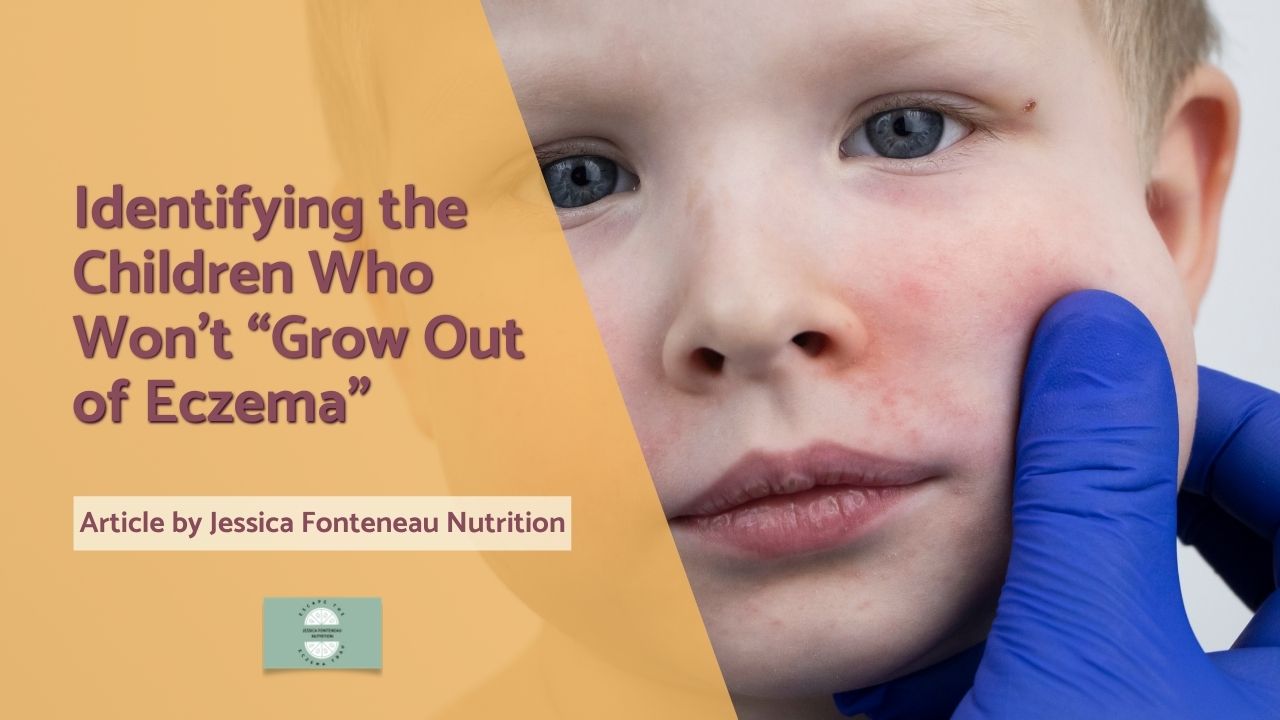
Identifying the Children Who Won’t “Grow Out of Eczema”:
How Nutrigenomic-Informed Nutrition Changes Outcomes in Paediatric Atopic Dermatitis
In paediatric practice, atopic dermatitis is often framed as a condition of time. Parents are reassured that most children will outgrow their eczema as the immune system matures and the skin barrier strengthens. Epidemiological data broadly supports this narrative, with approximately 80 percent of children experiencing improvement or remission by adolescence¹.
Yet this framing conceals a clinically significant minority. Around one in five children do not follow this trajectory. Their eczema persists, often intensifies, and frequently becomes the first visible step in the atopic march towards food allergy, asthma, and allergic rhinitis². By adolescence, these children are not simply managing eczema, but navigating a cluster of chronic inflammatory conditions that impact sleep, cognition, behaviour, and quality of life.
The challenge for clinicians is that we have historically lacked reliable tools to identify which children will fall into this high-risk group early enough to intervene. Severity alone is not enough. Nor is symptom suppression sufficient to change long-term outcomes.
Over the past decade, however, a more predictive picture has begun to emerge, one that reframes persistent eczema not as “bad luck”, but as the visible expression of underlying biological constraints. These constraints are increasingly measurable, and, crucially, many are modifiable through targeted, food-first nutritional intervention.
A parent-friendly explanation of this topic is available here. [SUBSTACK LINK TO BE INCLUDED HERE]
From Severity to Biology: Predicting Persistence
A pivotal shift came with the publication of a prospective cohort study by Lauffer and colleagues, which demonstrated that persistence of paediatric atopic dermatitis can be predicted with over 80 percent accuracy by combining clinical features with circulating protein biomarkers measured at age three³.
This work matters because it moves eczema out of the realm of uncertainty. It allows clinicians to distinguish between children whose skin is delayed but developing, and those whose repair systems are fundamentally struggling.
Four markers emerged as particularly informative.
The strongest predictor was a high SCORAD score at age three. SCORAD captures not only the extent and intensity of eczema, but also pruritus and sleep disruption. A persistently high score at this age reflects more than active inflammation, it signals impaired immune regulation and barrier repair during a critical developmental window³.
A second predictor was a history of infantile seborrhoeic dermatitis. Although commonly regarded as benign, cradle cap appears to signal early dysregulation in epidermal lipid metabolism³. From a nutritional perspective, this is highly relevant, as lipid synthesis and barrier formation depend on adequate essential fatty acids, fat-soluble vitamins, and micronutrients involved in keratinocyte differentiation.
The third marker was weather sensitivity. Children whose eczema flares with changes in temperature or humidity appear to represent a distinct inflammatory phenotype³. This pattern points towards instability in mast cell signalling and impaired histamine clearance, rather than simple allergen exposure.
The fourth, and most biologically revealing, marker was low vascular endothelial growth factor (VEGF). While VEGF is typically elevated in inflammatory states, children with persistent eczema showed paradoxically low levels³. This finding suggests that chronic eczema is not only a condition of excess inflammation, but one of impaired tissue repair and regeneration.
Together, these markers tell a coherent biological story, one that moves beyond symptom control towards understanding why the skin is failing to stabilise.

Why Repair Fails: Nutrient-Dependent Pathways
VEGF is central to angiogenesis, tissue repair, and maintenance of epidermal integrity. Its identification as a persistence marker is therefore critical, because VEGF signalling is highly nutrient dependent.
Vitamin D regulates VEGF receptor expression and endothelial function. Multiple systematic reviews and meta-analyses demonstrate that vitamin D supplementation significantly reduces eczema severity in both adult and paediatric populations⁴⁻⁸. Benefits are most consistent in children with deficiency, with doses around 1,600 IU daily showing the greatest effect⁴,⁶. Importantly, these improvements extend beyond immune modulation to barrier repair and tissue regeneration.
Vitamin A plays an equally essential role. Retinoid signalling directly influences keratinocyte differentiation and VEGF synthesis⁹. However, some individuals carries polymorphisms in the BCO1 gene that reduce conversion of beta-carotene to active retinol by up to 70 percent. In these children, a diet rich in vegetables may still fail to support adequate retinoid signalling, making preformed vitamin A from foods such as liver, egg yolks, and dairy biologically necessary.
Zinc is required for multiple enzymes involved in tissue remodelling, immune regulation, and VEGF activation. Suboptimal zinc status is frequently observed in children with chronic inflammatory skin disease, particularly where dietary restriction or prolonged inflammation is present.
In practice, these pathways explain why some children fail to respond fully to otherwise “healthy” diets. The issue is not diet quality alone, but biological accessibility.
The Gut–Skin Axis and Microbial Resilience
Persistent eczema is increasingly recognised as a systemic condition rooted in gut barrier integrity and microbiome composition⁷,¹⁰. One of the most influential genetic contributors to this axis is the FUT2 gene, which determines secretor status.
Individuals with a functional FUT2 gene secrete blood group antigens into the gut mucus layer, providing a preferential substrate for beneficial microbes such as Bifidobacterium and Lactobacillus. Non-secretors lack this substrate, resulting in reduced microbial diversity and a more pro-inflammatory intestinal environment.
This has downstream consequences. Gut microbes ferment dietary fibre into short-chain fatty acids, particularly butyrate, which plays a key role in maintaining gut barrier integrity and regulating T-regulatory immune responses⁷. Reduced SCFA production is associated with increased intestinal permeability and heightened systemic inflammation, both of which are implicated in atopic disease.
For children with reduced microbial resilience, nutritional strategies must move beyond generic fibre advice. Targeted prebiotic diversity and carefully selected fermented foods can help support microbial ecosystems that dampen immune over-activation, without resorting to indiscriminate supplementation.

Histamine Handling and the Weather-Reactive Phenotype
Weather-reactive eczema is often described as environmental sensitivity, but mechanistically it frequently reflects impaired histamine clearance rather than excessive histamine release.
Histamine is metabolised primarily by diamine oxidase in the gut and histamine N-methyltransferase in tissues. Genetic variation can reduce the activity of these enzymes by 40 to 60 percent. When physiological histamine release is triggered by temperature or humidity changes, children with reduced clearance capacity experience prolonged inflammatory signalling in the skin.
Both enzymes are nutrient dependent. DAO requires vitamin B6, vitamin C, zinc, and copper, while HNMT relies on adequate methylation capacity supported by B vitamins and methionine intake. When cofactor availability is insufficient, histamine accumulates, amplifying pruritus and barrier disruption.
Clinically, this explains why some children flare despite avoidance of obvious triggers, and why symptom control alone fails to stabilise the condition.
Inflammatory Tone Is Modifiable
Children with persistent eczema often demonstrate elevated pro-inflammatory cytokines, particularly IL-17 and MIP-1β, reflecting exaggerated Th17 pathway activation². While genetic variation in inflammatory genes such as TNF, IL6, and CRP can predispose to higher inflammatory tone, these pathways are highly responsive to dietary modulation.
Omega-3 fatty acids from oily fish provide EPA and DHA, which compete with arachidonic acid to produce less inflammatory eicosanoids. Clinical trials consistently demonstrate improvements in eczema severity when omega-3 intake is increased and the omega-6 to omega-3 ratio is corrected⁹.
Dietary polyphenols such as curcumin and quercetin further modulate inflammation by down-regulating NF-κB signalling, a master regulator of inflammatory gene expression. These effects extend beyond the skin, influencing gut, immune, and vascular function.

From Theory to Clinic: What Changes in Practice
This emerging evidence has practical implications. It suggests that persistent paediatric eczema is not simply a failure of topical management, but a reflection of constrained biological capacity for repair, regulation, and resilience.
In my clinical practice, I use nutrigenomic data alongside detailed clinical history to identify children whose eczema is unlikely to resolve spontaneously. By assessing variation in pathways related to skin repair, vitamin metabolism, microbial resilience, and histamine clearance, it becomes possible to stratify risk and personalise nutritional support conservatively and precisely. This approach forms part of my specialist paediatric eczema work.
Interventions remain food-first and are designed to support, not replace, medical care. The goal is to create the biological conditions that allow the skin barrier to stabilise and immune responses to mature appropriately.
Conclusion
For the children who will not simply “grow out” of eczema, early identification matters. The science now supports a shift from reactive symptom management towards proactive biological support.
Nutrigenomic-informed nutrition does not offer a cure, nor does it compete with dermatological care. Instead, it provides a framework for understanding why some children fail to respond as expected, and how targeted nutritional support may alter long-term trajectory.
As our understanding of eczema deepens, the opportunity lies not in doing more of the same, but in recognising which children need something different.
References
- Davidson W, et al. Report from the National Institute of Allergy and Infectious Diseases workshop on atopic dermatitis and the atopic march. J Allergy Clin Immunol. 2019;143(3):894–913.
- Tham E, Leung D. Mechanisms by which atopic dermatitis predisposes to food allergy and the atopic march. Allergy Asthma Immunol Res. 2019;11(1):4–15.
- Lauffer F, et al. Predicting persistence of paediatric atopic dermatitis. Allergy. 2020;75(11):2850–2861.
- Kim MJ, et al. Vitamin D status and efficacy of vitamin D supplementation in atopic dermatitis. Nutrients. 2016;8(12):789.
- Kim G, Bae J. Vitamin D and atopic dermatitis. Nutrition. 2016;32(9):909–915.
- Hattangdi-Haridas SR, et al. Vitamin D deficiency and supplementation in atopic dermatitis. Nutrients. 2019;11(8):1854.
- Zhu TH, et al. Epithelial barrier dysfunctions in atopic dermatitis. Br J Dermatol. 2018;179(3):570–581.
- Novsa RR, Andina. Effectiveness of vitamin D supplementation in atopic dermatitis. J Adv Res Med Health Sci. 2024;10(01):1–10.
- Ryczaj K, et al. Feeding the skin barrier. Clin Transl Allergy. 2025;15(1):e70105.
- Yang L, Xia JN. Gut–skin axis in atopic dermatitis. Int J Gen Med. 2025;18:123–135.


WHO AM I?
I’m Jessica Fonteneau, the Eczema and Digestive Health Nutrition Expert. I’ve worked with hundreds of clients to help them change their diets, better manage their flares, and find relief.
My vocation is to help those with eczema and digestive issues, because I have suffered with these interlinked conditions since I was 6 months old, and I truly know what it is like to experience these debilitating conditions.
Every client I have ever worked with has their own triggers and ideal nutrition. There is no such thing as ‘one-size-fits-all’. Whether you work with me one-to-one or use my guided tools, my objective is to help you uncover what works best for you, so that you take back control and experience relief.
My guided programmes are only suitable for adults as children have very specific nutrition requirements. I do, however, work with many child clients as part of my clinic.
To easily keep up with my articles, masterclasses, ebooks and online programmes and receive exclusive access to early bird offers, subscribe to my Substack, The Eczema Trap® here.
Google Reviews


Basit Gilani
5 months ago
We have been working with Jessica for a while now for my son’s eczema and many food intolerances. We have come a long way with him tolerating a lot more foods whilst previously being on such a limited diet. We have seen a huge difference in his skin too. One thing we love about working with her is that she is highly knowledgeable about how the gut works, what food works well and how to carefully introduce food to increase tolerance. We would honestly be so lost without her support. She provides timely responses if we have any concerns and always has such an empathetic approach if we have a little bump in our journey.
I would recommend Jessica to any parents struggling with their childs eczema or any individuals out there trying to figure out eczema, want to naturally heal through foods and identifying triggers to get relief in your flares.
I would recommend Jessica to any parents struggling with their childs eczema or any individuals out there trying to figure out eczema, want to naturally heal through foods and identifying triggers to get relief in your flares.

Insight Parenting
7 months ago
I have no hesitation in highly recommending Jessica. She really knows her stuff! I first consulted her six months ago with lack of appetite, lack of energy and depression, not unrelated to having recently become a widow. Right from the start I was very impressed at the way Jessica really listened to me during her consultations, writing very thorough and detailed reports afterwards with her holistic recommendations . Six months later I am eating better, have more energy and even able to go dancing regularly (which is not bad for a 74 year old!) Thank you Jessica

Katharina Ehrhart
10 months ago
Jessica has helped save my sanity when I was suffering from unexplained symptoms. She very quickly identified that this could be the side effects of an overdose of supplements and once I discontinued these, I felt better quickly. I continued working with Jessica on other food and lifestyle questions and always found her extremely helpful, patient and knowledgable. I would recommend her to friends and family.

Olivia Churchill
10 months ago
Jessica was a fantastic support when my 1 year old developed severe eczema. We worked together to identify the root cause of her symptoms and Jessica advised an easy to follow, realistic and successful protocol for us to follow to help her manage this. My daughter’s skin significantly calmed down within weeks and although it’s been a long journey her eczema has now disappeared. Jessica has extensive knowledge on eczema and created a personal plan for us to follow. She was always available and willing to help and reassure where needed. I wouldn’t hesitate to recommend her to anyone looking for support with nutrition or skin issues. Thank you so much!

Farah Fenoughty
1 year ago
We have been working with Jessica Fonteneau for several months now. From the very first consultation Jessica was empathetic and listened attentively to concerns about our son's health and Eczema. Since then we are really seeing the benefits of her advice and nutritional recommendations. I have learnt so much! Jessica's offers practical and manageable solutions and doesn't bombard you with too much information or unattainable goals. I am so glad we found Jessica Fonteneau and highly recommend.

Evie Smith
1 year ago
After struggling with severe eczema nearly all my life and trying countless steroid creams/emollients prescribed by dermatology consultants I have finally been able to take back control of my skin through Jessica's trigger identifying diet. The skills and tool kit she has provided me with have been life changing and I'm confident I have everything I need to continue my journey without the help of a professional. Jessica has helped me to feel empowered through understanding my body and I am very grateful.

Hayley Brookhouse
2 years ago
Jessica has helped me and my son so much with some persistent eczema on his face. She put together a highly comprehensive plan and considered all aspects of his diet, routine and lifestyle. She has checked in several times since our appointment and I felt she really cared about his health and well-being. Highly recommend to any parents whose child is suffering from an allergy or skin disorder!
 English (UK)
  Français