
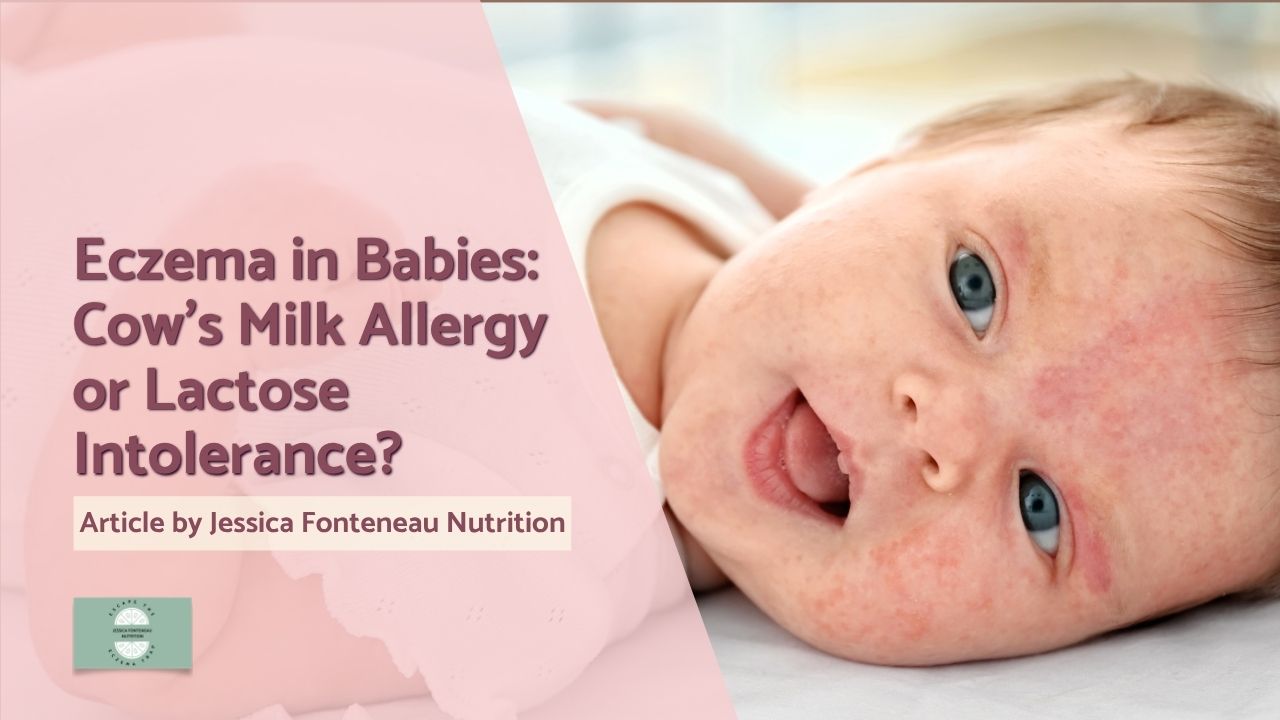
Eczema in Babies: Cow’s Milk Allergy or Lactose Intolerance?
For a shorter and more personal version of this article, you can read the accompanying Escape the Eczema Trap® Substack article here.
Your baby has eczema, reflux, loose or mucousy stools and seems uncomfortable after feeding and you suspect that cow’s milk might be triggering it. At some point during a conversation with your GP or a friend, the phrase “lactose intolerance” pops up. You go out, buy the expensive, lactose free formula hoping that it will help and end up second guessing yourself as to whether cow’s milk was the issue, as all of the symptoms remain.
I hear versions of this story all the time in my paediatric practice. At the heart of the matter is that cow’s milk allergy and lactose intolerance aren’t interchangeable, despite so much of the information online insinuating that they are. Cow’s milk protein allergy, usually shortened to CMPA or CMA, involves an immune reaction to proteins in cow’s milk. Lactose intolerance happens when there isn’t enough lactase activity to digest lactose, the natural carbohydrate in milk.¹ So if your child has an issue with cow’s milk protein rather than lactose, then just removing the lactose won’t help.
The difference can be tricky to spot too. Both can produce digestive symptoms, which is probably why the terms become so easily confused. Beyond that overlap, the physiology, age of presentation, associated symptoms and management are very different. In a baby with eczema, understanding which part of milk is being discussed by your medical practitioner is particularly relevant because skin symptoms belong to the allergic picture, not to lactose malabsorption itself.
An eczema diagnosis doesn’t automatically equate with a cow’s milk allergy either. Most babies with eczema don’t need dairy removed from their diet simply because they have eczema, so please don’t simply assume and remove it from your child’s diet. The question becomes more interesting when the skin symptoms are accompanied by persistent digestive problems, feeding difficulties or other features of atopy (hay fever, asthma etc.)
Why lactose doesn’t explain the eczema
Cow’s milk contains protein and carbohydrates. The main proteins include casein and whey proteins. In CMPA, the immune system reacts to one or more of these proteins and the reaction may be IgE mediated, non IgE mediated or mixed.¹ This is why cow’s milk allergy can involve more than the digestive tract. Skin, gastrointestinal and respiratory symptoms can all form part of an allergic presentation.
Lactose is completely different. It is the natural sugar in milk and is broken down in the small intestine by an enzyme called lactase. If lactase activity is insufficient, lactose isn’t completely digested and more of it reaches the lower intestine, where it can contribute to bloating, wind, abdominal discomfort and diarrhoea.² There is no allergic immune reaction to lactose, so lactose malabsorption itself doesn’t explain eczema.
That becomes quite an important piece of the puzzle when the skin and digestive symptoms have appeared together. A baby could, of course, have eczema for one reason and digestive symptoms for another, so I wouldn’t assume that the two are definitely linked. But if the suggested explanation for a baby with eczema, persistent diarrhoea and unsettled feeding is simply “lactose intolerance”, it doesn’t account for the skin part of the equation.
Age gives us another clue. Primary lactose intolerance generally develops later in childhood, with Lozinsky and colleagues describing onset from around three to four years rather than during early infancy.² Babies are normally very well equipped to digest lactose because it is one of the principal carbohydrates in breast milk. Secondary lactose malabsorption can occur temporarily when the intestinal lining has been damaged, for example following gastroenteritis, but that is a different problem from primary lactose intolerance and it still doesn’t provide an explanation for eczema.
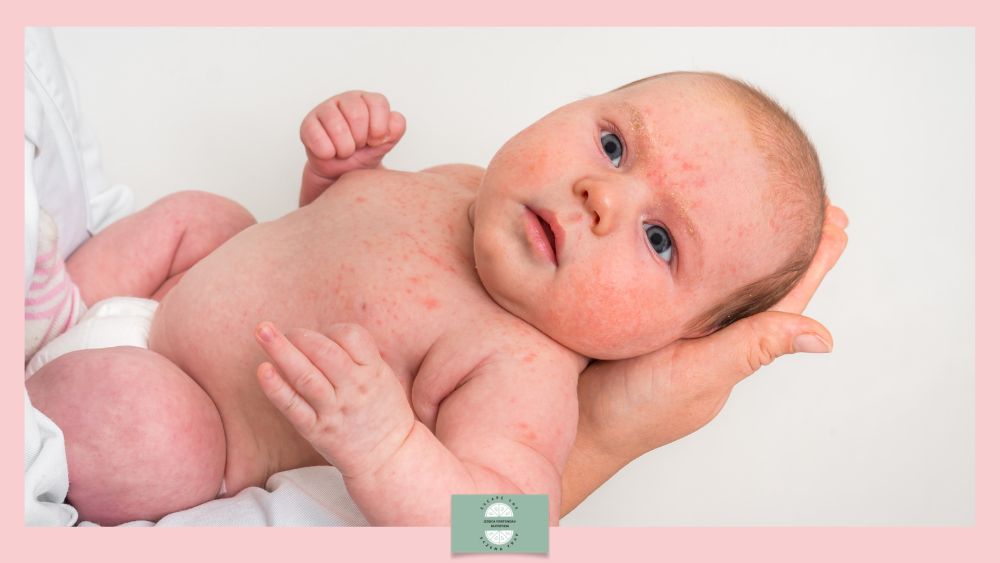
When eczema can be part of a cow’s milk allergy picture
Cow’s milk allergy doesn’t have a single recognisable presentation. Some babies have mainly digestive symptoms, some have skin symptoms and others have signs across several body systems.
Yang and colleagues studied 280 infants with cow’s milk protein allergy who had presented mainly with gastrointestinal problems. Diarrhoea was reported in 61.1%, blood in the stool in 53.2%, vomiting in 25.4% and constipation in 4.6%. Eczema was present in 20.4% of the infants.³
That 20.4% figure is useful for an eczema audience because it keeps things in proportion. Eczema clearly occurred among some infants with CMPA, but most of the infants in this particular CMPA group didn’t have eczema. Cow’s milk allergy and eczema can, therefore, co-exist without CMPA being the trigger for every baby’s eczema.
Most of the infants in Yang’s cohort were also very young, with 72.5% under six months of age.³ That doesn’t mean that nearly three quarters of babies under six months with digestive symptoms have CMPA. These infants had already been identified as having the condition. What it does show is that cow’s milk allergy often becomes apparent early in infancy, which is quite different from the usual timing of primary lactose intolerance.
Cavataio and colleagues looked at babies with reflux and found that dermatitis and rhinitis were more common in those whose reflux was linked with cow’s milk protein allergy than in those with reflux alone.⁴ So, when reflux appears alongside eczema or other allergic symptoms, cow’s milk allergy may be worth considering as part of the clinical picture.
If I am supporting a baby with eczema, I always want to know the rest of the context. Is there persistent vomiting or reflux? Are stools consistently loose, mucousy or bloody? Is feeding difficult? Is growth being affected? Are there respiratory or other allergic symptoms? Did everything begin around the same time or after a change in feeding? One isolated symptom doesn’t give us the whole picture, but as I so often mention, repeated patterns give us more useful information.
Eczema still isn’t a cow’s milk allergy test
Parents understandably want to find the magic trigger that is causing the eczema. I understand the temptation. If there’s a single food you could take away and the skin improves, it would feel as if you have finally found something tangible to control.
Unfortunately eczema doesn’t work that way and in many cases it is a combination of other underlying factors that need addressing so that the body can cope better, rather than a single trigger.
Skin flares and settles. Babies scratch more at some times than others. Heat, illness, sleep disruption, topical treatment and many other factors can change how the skin looks from one week to the next. If dairy is removed during a particularly bad flare and the skin improves ten days later, it is very easy to conclude that dairy caused the eczema even when that relationship has never been tested.
The 2023 ESPGHAN position paper cautions against diagnosing cow’s milk allergy from common infant symptoms and states that overdiagnosis occurs more frequently than underdiagnosis.⁵ Regurgitation, altered stools, crying and feeding difficulties are common during infancy. Even occasional spots of blood in the stool of an otherwise well infant shouldn’t automatically be treated as proof of CMPA.⁵
For eczema families, I think there is an additional danger. Once parents start watching food closely, every flare can become attached to whatever was eaten beforehand. Milk goes first. The eczema doesn’t completely clear, so perhaps soya goes next. Then egg. Then wheat or gluten. Before long, the diet can be far more restricted while the original question, whether any of those foods are actually contributing to the infant’s eczema, has never been properly answered.
I would rather explore one plausible relationship properly than remove five foods because they all appeared on somebody’s eczema trigger list.

Why a lactose free formula may leave the eczema exactly as it was
This is where the wording on formula packaging causes understandable confusion. Lactose free means that the lactose has been removed or substantially reduced. It doesn’t necessarily mean that the cow’s milk proteins have gone with it.
If your baby’s immune system is reacting to cow’s milk protein, switching from an ordinary cow’s milk formula to a lactose free cow’s milk formula can therefore leave the relevant proteins in place. The sugar has changed, but the suspected allergen hasn’t.
Schrander and colleagues studied 1,158 infants under one year of age and provide one of the few studies in which lactose reduction and cow’s milk protein intolerance both featured in the diagnostic process.⁶ Eighty infants improved after receiving a lactose reduced formula, while 26 were subsequently found to have proven cow’s milk protein intolerance.
It would be easy to simply say that the first group all had primary lactose intolerance, but the study doesn’t establish that. Improvement after lactose reduction shows that the dietary change was associated with improvement. It doesn’t actually explore why those infants responded. The study is still useful because it illustrates how similar feeding related digestive symptoms can take clinicians down different diagnostic routes.
For the parent of a baby with eczema, I would bring the conversation back to the skin as well as the gut. If diarrhoea improves but eczema doesn’t, that is useful information. If neither changes, that is useful information too. If the eczema and digestive symptoms both improve only when cow’s milk protein is removed, that gives us a different picture again, although it still needs the next step before we can be confident.
Removing milk is only half of a diagnostic trial
There isn’t one blood test that diagnoses every form of cow’s milk allergy.
IgE mediated reactions tend to occur more rapidly and skin prick testing or serum specific IgE may help support the diagnosis when the history suggests this type of reaction.⁷ Non IgE mediated reactions can be slower and may predominantly affect the gastrointestinal tract or skin, so negative IgE testing doesn’t exclude them.
For suspected non IgE mediated CMPA, guidelines recommend a defined period without cow’s milk protein followed by planned reintroduction or oral challenge.⁸ A diagnostic elimination commonly lasts around two to four weeks, depending on the type of symptoms.
With eczema, I would want the family to know in advance what they are looking for rather than relying on a vague impression that the baby seems “better”. What happens to the extent and severity of their child’s eczema? Is scratching reduced? Are sleep and comfort changing alongside the skin? What happens to the stools, reflux, vomiting and feeding? Taking photographs and keeping simple contemporaneous notes can be far more useful than trying to remember several weeks later.
Then comes reintroduction.
If cow’s milk protein is removed and the eczema settles, it is tempting never to give it again. But without reintroducing it, where clinically safe, we can’t know whether milk was genuinely responsible for the improvement. Eczema naturally fluctuates and a child could otherwise remain dairy free for months or years on the basis of a coincidence.
If symptoms return during an appropriately planned reintroduction, the relationship becomes much more convincing. A previous immediate or severe reaction changes the situation entirely and should be managed with the appropriate medical team rather than challenged at home.⁸
What happens when CMPA is confirmed?
For formula fed infants with confirmed CMPA, extensively hydrolysed formula is generally recommended as the first option.¹˒⁸ The cow’s milk proteins have been broken down into smaller peptides to reduce their allergenicity. Amino acid formulas, where the protein is supplied as individual amino acids, are generally reserved for babies with particular clinical needs, including some severe presentations or those who don’t tolerate an extensively hydrolysed formula.
If eczema is part of the baby’s presentation, parents understandably focus on whether the new formula clears the skin. I would also want to know what happens to feeding, stools, reflux, growth and general comfort. If several symptoms appeared at the same time, improvement across the wider presentation can give us more useful information than watching one patch of eczema in isolation.
Breastfeeding can usually continue when a breastfed baby has confirmed CMPA. The mother may be advised to remove cow’s milk protein from her own diet for a defined period while the baby remains breastfed.¹˒⁸ If she has already stopped eating milk, soya, egg and several other foods because she is frightened of worsening her baby’s eczema, I am far more concerned. A breastfeeding mother needs adequate nutrition herself, and exclusions should have a clinical reason, a defined period of investigation and a plan for what happens next.
The eczema food restriction trap
This is probably the part of the conversation I see most often in practice and which I try to educate the most against.
A parent notices that their baby’s eczema is bad after a particular feed or meal and removes the food. The eczema improves for a while, then flares again. Another food is removed. The skin settles, then flares. The list gets longer and confidence around feeding gets smaller.
Once complementary feeding begins, the effect can become even more obvious. Parents who have watched their child suffer with eczema can become extremely cautious about introducing foods because every new rash or increase in scratching feels threatening. Some children end up eating from a very narrow range of “safe” foods without anyone ever establishing which exclusions were necessary.
This is where looking at nutrition purely through the lens of avoiding triggers becomes unhelpful. Skin is living, growing tissue. Babies and young children need sufficient energy and protein, essential fats, vitamins and minerals to support normal growth, skin repair and barrier function. If foods genuinely need to be excluded, the rest of the diet needs to be built around those exclusions properly rather than simply becoming smaller.
I am also interested in what happens when foods are put back. Sometimes the useful nutritional work is identifying a genuine food reaction and helping a family manage it safely. Sometimes it is helping parents reintroduce foods that were removed months earlier without a convincing reason. There’s a different conversation to be had in both situations.
Keeping the wider picture in mind
CMPA isn’t the only thing that can trigger reflux, vomiting, changes in stools and eczema, which is another reason not to jump straight from symptoms to dietary exclusion.⁹ If symptoms are persistent, your baby isn’t growing as expected, there is repeated blood in the stool or they seem generally unwell, then please book in with your GP or paediatric team rather than continuing to experiment with formula or food exclusions at home.
My nutritional therapy role is to look closely at whether a food trigger may be part of your child’s eczema picture, what has already been tried and whether those dietary changes have actually given us useful information. I also want to make sure that, where an exclusion is needed, both your baby’s diet and, where relevant, the breastfeeding mother’s diet remain nutritionally adequate while you work out what is and isn’t contributing to the eczema.
But nutritional therapy isn’t only about what we take away. Babies and young children are growing rapidly and need enough energy, protein, essential fats, vitamins and minerals to support that growth, as well as the normal development of their skin, gut and immune system.
I look at whether your child is getting the nutrients they need to thrive, support skin repair and barrier function, and provide the foundations their developing gut needs as it matures. As children grow, their digestive and immune systems become more established and many early food reactions can change too. Supporting good nutrition during that period helps us build a child who is better nourished and more resilient, rather than leaving them on an increasingly restricted diet in the hope that avoiding more foods will solve the eczema.
I am also looking at variety, texture, protein intake, essential fats and the gradual introduction or reintroduction of foods where appropriate. Sometimes the work involves identifying a food that genuinely needs to be avoided for a period. Just as often, it involves making sure the foods that remain provide everything your child needs, then widening the diet again as soon as we can, when it is safe to do so. The goal is a child who is eating as broadly as possible, growing well and has the nutritional building blocks their skin and wider body need for repair, development and resilience.
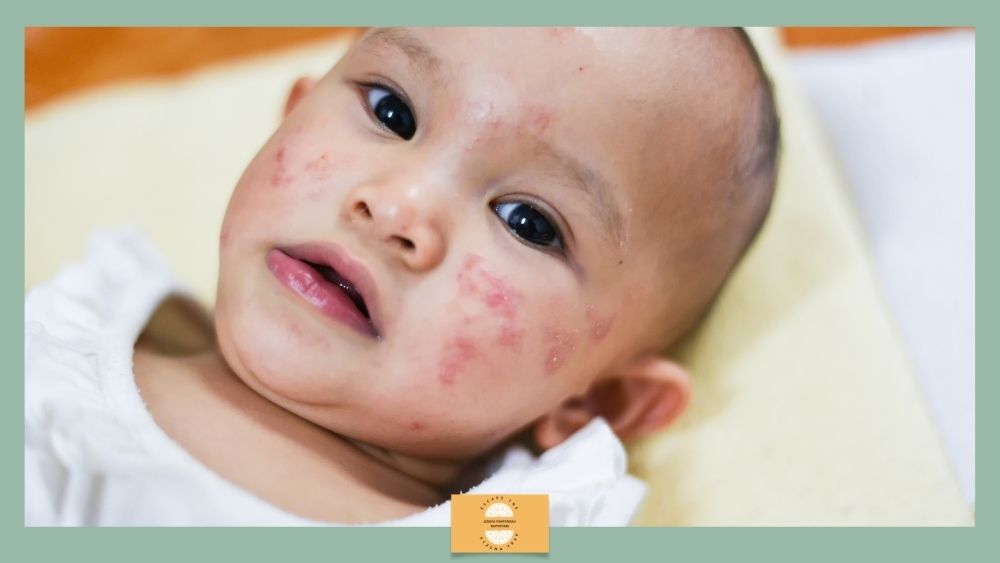
Cow’s milk allergy usually isn’t forever
Parents can understandably feel quite overwhelmed when a cow’s milk allergy is confirmed, particularly if they are already dealing with difficult eczema. It can sound as though milk has now disappeared from the child’s life indefinitely.
For most children, that isn’t actually the case.
Høst and colleagues followed children with cow’s milk protein allergy or intolerance over their childhood. Around 56% had recovered by one year, 77% by two years, 87% by three years and 92% by five years. By 15 years of age, 97% were tolerant.¹⁰ Children with IgE mediated allergy can follow a different course and no population statistic tells us exactly when an individual child will tolerate milk, but the data is broadly reassuring.
Reintroduction, therefore, is a really important part of most children’s plans. For suitable children this may eventually involve a tailored milk ladder, beginning with more extensively heated forms of milk protein and gradually progressing towards less processed milk. The BSACI guideline includes graded reintroduction as part of cow’s milk allergy management, with the approach determined by the child’s clinical history and type of reaction.¹¹
Eczema families often find this stage emotionally difficult. After months of watching the skin and worrying about food, putting milk back can feel completely counterintuitive. Clear guidance around when reintroduction is appropriate, what form of milk to begin with, how much to offer and what symptoms to watch for can make an enormous difference.
And the skin still needs to be interpreted carefully. A small eczema fluctuation during reintroduction isn’t necessarily the same as a reproducible allergic reaction. Equally, a consistent return of the same skin and gastrointestinal pattern is also relevant. The history or patterns observed over time give us much more information than a single flare, even if that flare is a bad one.
What I see in my paediatric eczema practice
By the time families come to see me, they have often already done a great deal of work. They have changed formula, removed foods, read ingredient labels, kept diaries, photographed nappies and spent far too much time searching online at two o’clock in the morning.
They don’t need any more information, they need someone who can see the wood for the trees.
I go back to when the eczema first started and what was happening with feeding at the time. Was the baby exclusively breastfed and, if so, were symptoms already present? Did anything change when formula was introduced? Were there digestive symptoms before the eczema or did everything begin together? What formulas have actually been used? Were they ordinary cow’s milk formula, lactose free, extensively hydrolysed or amino acid based? How long was each one tried and what happened while the baby was taking it?
With breastfeeding families, I look at exactly what Mum has removed and what replaced it. “I stopped dairy” can represent very different diets. One mother may have replaced milk and yoghurt with fortified alternatives and continued eating a broad diet. Another may have taken out dairy, soya, egg and wheat and be struggling to eat enough while caring for a baby who is constantly waking and itching.
I also look beyond the question of milk. If food is being identified as the cause of every eczema flare, I want to review whether the history actually supports that. If a genuine reaction is plausible, we can check it in a structured way. If the diet has become narrow because of fear rather than reproducible reactions, rebuilding variety can become a vital part of supporting the child’s skin and wider health.
In my practice, eczema alongside digestive symptoms is something I see all the time. Clinical observation can’t establish causation, but the consistency of the pairing of the two is something that I am very aware of. What I don’t see is one universal eczema diet or one food that explains every child or every reaction. The work is identifying which areas are relevant to that particular baby or child without creating restrictions that offer no benefit and could cause harm.
Where nutritional therapy can help
I work alongside GPs, dermatologists, paediatricians and allergy teams, looking at the detailed nutritional and feeding history that can be difficult to cover in a short medical appointment. That may include assessing what has already been removed, whether previous dietary trials actually tested the suspected trigger, whether nutritional intake remains adequate and how complementary feeding is progressing.
If cow’s milk genuinely needs to be removed, I can help make sure the diet around that exclusion stays nutritionally sound. If your child has reached the point where several foods are being avoided without a clear reason, we can work through what can safely be reconsidered. If you are breastfeeding and your own diet has become increasingly restricted in an attempt to calm your baby’s eczema, your nutritional needs need looking after too.
And sometimes the most useful outcome is finding that food isn’t the main issue. That is also valuable information. It allows a family to stop chasing dietary triggers and direct their time and energy elsewhere.
If your baby or child has eczema and you are no longer sure whether cow’s milk, lactose or any other food is genuinely involved, you can book a discovery call with me to talk through whether nutritional therapy would be a useful next step.
For a shorter and more personal version of this article, you can read the accompanying Escape the Eczema Trap® Substack article here.
So, is it cow’s milk allergy or lactose intolerance?
If your baby has eczema, the first thing to remember is that lactose intolerance doesn’t explain the skin. It can cause digestive symptoms, but it is not an allergic condition.
Cow’s milk protein allergy can include eczema as part of the presentation, particularly when skin symptoms sit alongside persistent gastrointestinal or other allergic features, but eczema alone still isn’t enough to diagnose it.
A lactose free formula may therefore be completely the wrong dietary experiment if cow’s milk protein is what you are trying to investigate. Equally, removing dairy simply because a baby has eczema can create a restriction that was never needed.
The useful work sits in between those two extremes. Look at the whole pattern, be clear about what part of milk is actually being tested, remove it properly if a diagnostic elimination is clinically appropriate, and reintroduce it as soon as it is safe to do so. That gives you far more information about your child’s eczema than continuing to remove foods one after another and hoping eventually the skin will tell you why it is flaring.
Références
- Kansu A, Yüce A, Dalgıç B, et al. Consensus statement on diagnosis, treatment and follow up of cow’s milk protein allergy among infants and children in Turkey. Turk J Pediatr. 2016. doi:10.24953/TURKJPED.2016.01.001.
- Lozinsky AC, Meyer R, Anagnostou K, et al. Cow’s milk protein allergy from diagnosis to management: a very different journey for general practitioners and parents. Children. 2015. doi:10.3390/children2030317.
- Yang Q, Zheng B, Zhou S, Dai D. Clinical features of cow’s milk protein allergy in infants presenting mainly with gastrointestinal symptoms: an analysis of 280 cases. Zhongguo Dang Dai Er Ke Za Zhi. 2019.
- Cavataio F, Iacono G, Montalto G, et al. Clinical and pH metric characteristics of gastro oesophageal reflux secondary to cows’ milk protein allergy. Arch Dis Child. 1996. doi:10.1136/adc.75.1.51.
- Vandenplas Y, Broekaert I, Domellöf M, et al. An ESPGHAN position paper on the diagnosis, management and prevention of cow’s milk allergy. J Pediatr Gastroenterol Nutr. 2023. doi:10.1097/MPG.0000000000003897.
- Schrander JJP, van den Bogart JPH, Forget PP, et al. Cow’s milk protein intolerance in infants under 1 year of age: a prospective epidemiological study. Eur J Pediatr. 1993. doi:10.1007/BF01955238.
- Greef E, Hauser B, Devreker T, et al. Diagnosis and management of cow’s milk protein allergy in infants. World J Pediatr. 2012. doi:10.1007/s12519-012-0332-x.
- Koletzko S, Niggemann B, Arató A, et al. Diagnostic approach and management of cow’s milk protein allergy in infants and children: ESPGHAN GI Committee practical guidelines. J Pediatr Gastroenterol Nutr. 2012. doi:10.1097/MPG.0b013e31825c9482.
- Al Beltagi M, Saeed NK, Bediwy AS, et al. Cow milk protein allergy mimics in infancy. World J Clin Pediatr. 2025. doi:10.5409/wjcp.v14.i3.103788.
- Høst A, Halken S, Jacobsen HP, et al. Clinical course of cow’s milk protein allergy/intolerance and atopic diseases in childhood. Pediatr Allergy Immunol. 2002. doi:10.1034/j.1399-3038.13.s.15.7.x.
- Luyt D, Ball H, Makwana N, et al. BSACI guideline for the diagnosis and management of cow’s milk allergy. Clin Exp Allergy. 2014. doi:10.1111/cea.12302.


QUI SUIS-JE ?
Je suis Jessica Fonteneau, l'experte en nutrition pour l'eczéma et la santé digestive. J'ai travaillé avec des centaines de clients pour les aider à modifier leur régime alimentaire, à mieux gérer leurs poussées et à trouver un soulagement.
Ma vocation est d'aider les personnes souffrant d'eczéma et de problèmes digestifs, car je souffre de ces affections interdépendantes depuis l'âge de six mois, et je sais vraiment ce que c'est que de vivre ces affections débilitantes.
Chaque client avec lequel j'ai travaillé a ses propres déclencheurs et sa propre alimentation idéale. Il n'existe pas de solution unique. Que vous travailliez avec moi en tête-à-tête ou que vous utilisiez mes outils guidés, mon objectif est de vous aider à découvrir ce qui fonctionne le mieux pour vous, afin que vous repreniez le contrôle et que vous ressentiez un soulagement.
Mes programmes guidés ne conviennent qu'aux adultes, car les enfants ont des besoins nutritionnels très spécifiques. Je travaille cependant avec de nombreux enfants dans le cadre de ma clinique.
Pour suivre facilement mes articles, masterclasses, ebooks et programmes en ligne et bénéficier d'un accès exclusif aux offres de pré-vente, Abonnez-vous à mon Substack, The Eczema Trap® ici.
Avis de Google


Basit Gilani
il y a 6 mois
Nous travaillons avec Jessica depuis un certain temps pour l'eczéma de mon fils et ses nombreuses intolérances alimentaires. Nous avons fait beaucoup de progrès avec lui, car il tolère beaucoup plus d'aliments alors qu'il suivait auparavant un régime très limité. Nous avons également constaté une énorme amélioration de sa peau. Ce que nous aimons particulièrement chez elle, c'est qu'elle est très compétente sur le fonctionnement de l'intestin, sur les aliments qui conviennent et sur la manière d'introduire prudemment les aliments pour augmenter la tolérance. Honnêtement, nous serions tellement perdus sans son soutien. Elle répond rapidement à nos préoccupations et adopte toujours une approche empathique lorsque nous rencontrons un petit obstacle sur notre chemin.
Je recommanderais Jessica à tous les parents aux prises avec l'eczéma de leur enfant ou à toute personne cherchant à comprendre l'eczéma, désirant guérir naturellement par l'alimentation et identifier les déclencheurs pour soulager les poussées.
Je recommanderais Jessica à tous les parents aux prises avec l'eczéma de leur enfant ou à toute personne cherchant à comprendre l'eczéma, désirant guérir naturellement par l'alimentation et identifier les déclencheurs pour soulager les poussées.

Le Parentage éclairé
il y a 7 mois
Je recommande vivement Jessica sans aucune hésitation. Elle sait vraiment de quoi elle parle ! Je l'ai consultée pour la première fois il y a six mois, souffrant d'un manque d'appétit, d'un manque d'énergie et de dépression, non sans rapport avec le fait d'être récemment devenue veuve. Dès le début, j'ai été très impressionnée par la façon dont Jessica m'écoutait attentivement lors de ses consultations, rédigeant ensuite des rapports très complets et détaillés avec ses recommandations holistiques. Six mois plus tard, je mange mieux, j'ai plus d'énergie et je peux même aller danser régulièrement (ce qui n'est pas mal pour une femme de 74 ans !) Merci Jessica.

Katharina Ehrhart
il y a 10 mois
Jessica m'a aidée à sauver ma raison quand je souffrais de symptômes inexpliqués. Elle a très rapidement identifié que cela pouvait être les effets secondaires d'un surdosage de suppléments et une fois que j'ai arrêté ceux-ci, je me suis rapidement sentie mieux. J'ai continué à travailler avec Jessica sur d'autres questions d'alimentation et de mode de vie et je l'ai toujours trouvée extrêmement utile, patiente et compétente. Je la recommanderais à mes amis et à ma famille.

Olivia Churchill
il y a 10 mois
Jessica a été d'un soutien fantastique lorsque ma fille de 1 an a développé un eczéma sévère. Nous avons travaillé ensemble pour identifier la cause profonde de ses symptômes et Jessica nous a conseillé un protocole facile à suivre, réaliste et efficace pour l'aider à gérer cela. La peau de ma fille s'est considérablement calmée en quelques semaines et, bien que le chemin ait été long, son eczéma a maintenant disparu. Jessica a des connaissances approfondies sur l'eczéma et a créé un plan personnalisé pour nous. Elle était toujours disponible et disposée à aider et à rassurer lorsque nécessaire. Je n'hésiterais pas à la recommander à quiconque recherche un soutien en matière de nutrition ou de problèmes de peau. Merci beaucoup !

Farah Fenoughty
il y a 1 an
Nous travaillons avec Jessica Fonteneau depuis plusieurs mois maintenant. Dès notre première consultation, Jessica s'est montrée empathique et a écouté attentivement nos préoccupations concernant la santé et l'eczéma de notre fils. Depuis, nous constatons vraiment les bienfaits de ses conseils et de ses recommandations nutritionnelles. J'ai tellement appris ! Jessica propose des solutions pratiques et réalisables, sans nous submerger d'informations ou d'objectifs inatteignables. Je suis tellement heureuse de vous avoir trouvée, Jessica Fonteneau, et je la recommande vivement.

Evie Smith
il y a 2 ans
Après avoir lutté pendant presque toute ma vie contre un eczéma sévère et avoir essayé d'innombrables crèmes à base de stéroïdes/émollients prescrits par des dermatologues consultants, j'ai enfin pu reprendre le contrôle de ma peau grâce au régime alimentaire de Jessica axé sur l'identification des déclencheurs. Les compétences et les outils qu'elle m'a fournis ont changé ma vie et je suis convaincu que j'ai tout ce qu'il faut pour poursuivre mon parcours sans l'aide d'un professionnel. Jessica m'a aidé à me sentir responsabilisé en comprenant mon corps et je lui en suis très reconnaissant.

Haley Brookhouse
il y a 2 ans
Jessica a tellement aidé mon fils et moi-même avec son eczéma persistant au visage. Elle a élaboré un plan très complet et a pris en compte tous les aspects de son alimentation, de sa routine et de son mode de vie. Elle a pris de mes nouvelles à plusieurs reprises depuis notre rendez-vous et j'ai senti qu'elle se souciait vraiment de sa santé et de son bien-être. Je la recommande vivement à tous les parents dont l'enfant souffre d'une allergie ou d'une affection cutanée !
 Français
  English (UK)